
Day 59: May 31, 2026
Back on the winding river, a serpentine 60-mile, 10-hour day is halted to reveal a “double whammy.” First a huge ice dam halts progress, then scouting reveals a massive grizzly in the neighborhood, fortunately on the other side of the river.
-
Yes, it's Will here. It's May 31st. I'm not sure about the date, the day of, day 60 maybe. Sitting here on the river, 10 o'clock, sun shining, pleasant blocks of ice floating by. It's been quite a day here. I have to pack it all in. I got up early expecting to get on the river and fight the north wind. The wind was blowing, and by God, when I checked the vent, it was blowing from the south. And so I got everything all set up. And everything was all snowed in. It looked like November. You get these heavy snows, and all of a sudden you get clear weather. It's just this beautiful, crisp. All the hills, all the trees were coated with snow and the chunks of ice floating by. It was a beautiful scene, and the clouds were lifting a little bit. And everything went real smoothly. My second pack out down the river, and the current was good. It was really pretty good, five, six miles an hour. You know, I did a 10-hour day. I was going to do longer, but I had a little delay here.
And so if you look on the satellite map, the river here bends and winds, hairpin turns. There was one turn that went 4.4 miles around. It almost went in a circle. And it only covered about 400 or 500 yards north. I mean, it's just like winding and twisting. I probably did close to 60 miles. I was paddling the whole time. And the river was not too challenging. There were a lot of bends. You never know what's around the bend. I was always careful looking for eddies and that that I could duck into it. Things look bad. You know, you don't want to get sucked into a bad current. And so I negotiated things.
A couple tricky sections on islands. You want to choose your right route around those. And there was one island I got on the wrong side, the bad side. And I noticed the current was slowing down. I realized, hey, there's a dead end up here, that's why. And so I managed to back paddle. I've been in that situation before, so I knew what was happening. Back paddle got into the main current on the other side. But nothing too hair-raising. But it was just stunningly beautiful. And the river is really quite big. Where I'm at here, it's about 150 yards. And there's a vertical, near vertical limestone walls across the river. There's this horseshoe bend or more like a hairpin bend. I'm on the outside of it. And then the hills on this side go up with trees, you know. It goes up maybe 400 or 500 feet. The first couple hundred feet are treed. And then bald with snow here and there, snowpack.
So it was really refreshing. I was just so gung-ho. I thought perhaps even tomorrow I could make the point where I'd start to hike. You know, I've got reservations to get out of Paulatuk on the 12th and got these major commitments. And I was all psyched that I could get home on time. And then ... but five miles, six miles back, the current started slowing down. And I thought, oh, God. Lucky thing there's not a north wind here. And all good things always come to an end. But the funny thing was, there's a lot more chunks of ice. Nothing dangerous, but there's a lot of these chunks. I didn't know where it was coming from. Until about five miles down the line, right before this hairpin turn. It's real hard because both shorelines are covered with ice, so it's hard to see where the channel is. And things are going real slow, chunks of ice. And I'm looking ahead, and I thought, there's no channel here. Is this an ice dam? Thought, Oh, my God. So I was on the other, wrong side of it. The current was not bad. I was able to paddle upstream. I dodged a few of the floating chunks of ice. Got over on this side where it's more level. A better place ... a place to camp. There's no place to camp, there's vertical ice on the other shore.
And what's happening here, this is a major ice dam. I mean, all the ice that's come down the river is in this one pile. I mean, when you have breakups, there's a number of dams. And one dam takes out another. And I was traveling, you know, at least 50 miles. I thought, okay, this is over with. I don't have to worry anymore. I mean, five miles back, I thought, well, slower river. At least I don't have to watch so much.
So I pulled everything out. I ate my lunch, which was my supper. And then I was going to walk around the crescent here and kind of get a view. And I was out about a half a mile. And on the other shore was this incredibly huge grizzly bear. I mean, a male, trophy-sized, muscular, working his way upstream. This is ah, fortunately, on the other side. And he didn't see me. I had my bear bangers. Bear bangers are like a flare. You shoot them, and they go a distance, and then they explode like a shotgun. They make an explosion, and it's made for scaring bears. I didn't have the range. Those shoot maybe 40 yards or so. But the important thing with a bear like this, I want to kind of test them out a little bit to see what kind, what his reactions are. So I shot a bear banger across. Big explosion. He didn't hardly even hesitate. It just kept going. And then I have these flares that make a whistle, and then they kind of pop. That usually gets your attention. It's got a longer range. Shot one of those, and it stopped for a second, and it just kept going. I thought, oh, my God, this thing. And then I shot a third bear banger, and this one, he stopped just for a second. He freaked, kind of backpedaled just quickly, and then he stopped, and then he started going again. And what I'm trying to figure out with this thing is, does it know what a gun is? If they know what a gun is, then they're afraid. And I shot two more. This is the second to the last one, he looked around, he hesitated. He wanted to go. He decided to kind of turn around. I shot another one. He didn't really bother with that one, but, you know, he's just reversed his course.
So I kind of have a double whammy here. I got the bear, which is a serious situation, fortunately on the other side. And I've got this ice jam. And the ice jam could break up tomorrow, it could be a long time. What will break it up if we ... it looks like we might get warmer weather. That's the main thing. But the center of this ice jam, I think it goes on for a couple miles. It's moving. I mean, there's streams if you're looking at it real ... and then that are moving. And this is a good sign. So I'm going to tomorrow move all my gear systematically down around the, the outside bend. I know it's kind of a higher level area, good place for a camp where I can see the ice jam. A little bit better for bear protection because I'm right in the woods here. And so tomorrow I'll move around that. I'm not going to try to get around this ice jam. I don't want to be on the downside of it when it goes.
So, things happen here. And things have changed. I'm in no danger with the ice dam at all. You know, I'm not in it. If I wasn't paying attention, once you get into the ice jam, you can't get out of it. And, I mean, that's a problem. But I'm here safe and sound.
And also for my staff, my batteries are really low. So I can't communicate by phone for now. And just stay in touch via these dispatches; I'll communicate. So stay tuned tomorrow and see what happens here. And the adventure is never over for me. So I'll talk to you later. Will, over and out. May 31st, 2026.
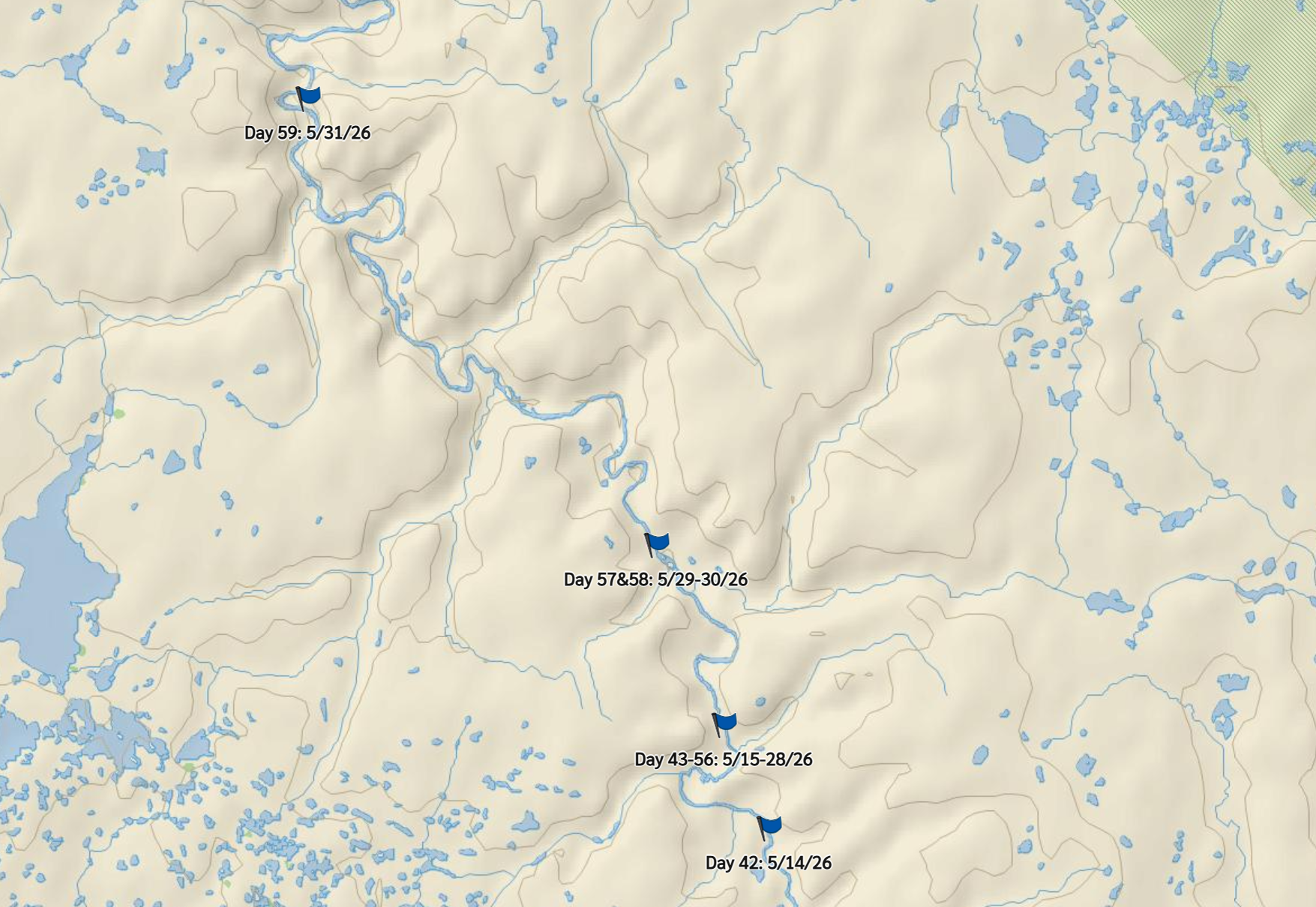
Progress up the Horton River resumes. Now it is a race to get up and off the river and into the final overland phase of the expedition. Visit Will’s interactive map for complete control of magnification and orientation.
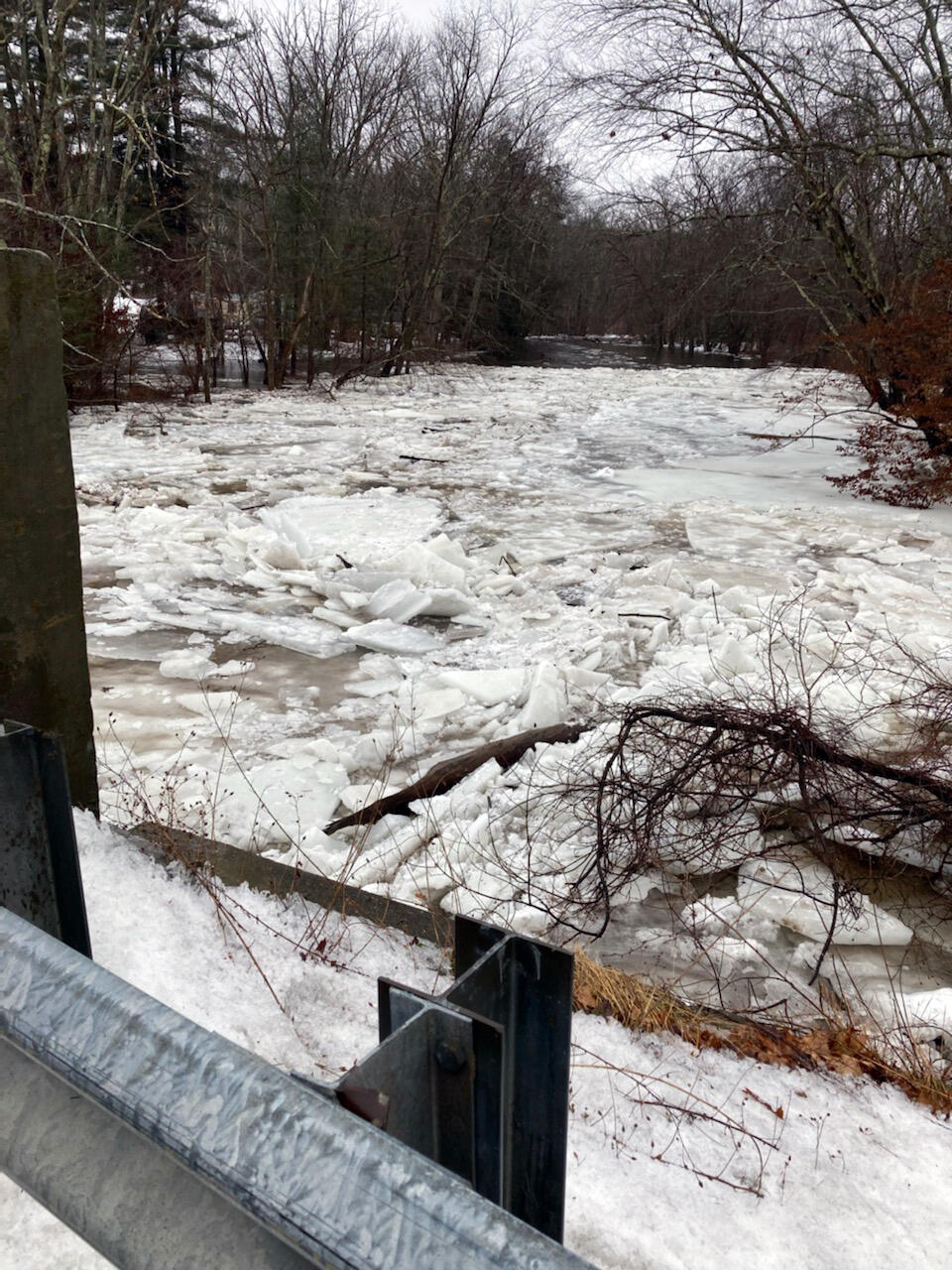
An ice jam on the Quinebaug River, Connecticut. Photo from USGS: "Ice Jams On Rivers."