
Day 54: May 26, 2026
A south wind brings the return of major thaw, the melting snow off the trees a harbinger for Will to dive into his first core leadership principle: The Quiet Mind.
-
Yeah, hello. It's Will here. It's May 26th, day 54. And I think this is my 11th day of wait here for the iceout. Yesterday was that fifth day of cold, and snow came yesterday. It looked like a Christmas scene with snow in the trees in the evening. But I took the usual walk in the evening and the wind shifted to the south. So that was a good sign.
And then last night sleeping, something hit the tent, a clump of snow from the tree above, it let go of some snow and woke me up. And that was also a good sign because that was a sign the temperatures were actually warming up. But the trees at night, it's like a twilight here, were actually starting to drop their snow. And then this morning, it cleared up for this glorious day. It's been totally clear since about noon. It's about 48 degrees. That's right at ground level, close to the snow. But it's ... air temperature in the woods are quite a bit higher than that. It was just a marvelous day.
And it looks like this is a major thaw. The wind is blowing pretty strong from the south all day here. So I think that thaw is coming back again. Actually, it left off when the cold weather came in. The thaw was up to about 48 degrees. And that's where it was today. And hopefully we'll see if it gets into the fifties tomorrow. This may be the one that will loosen these rivers up so I can start here pretty soon. And so I'm pretty happy about that.
I wanted to talk a little bit about the Quiet Mind, as I mentioned yesterday. First of all, my solos. I've been doing exclusively solos for expeditions. [... ...] All these iceouts were [...] in the spring and travel for a distance and so forth. And prior to that, the reason I'm doing not major expeditions, I just don't have the time to do two or three years [... ... ] to organize an expedition anymore. My [... ... ] is the Steger Center, getting that launched this year and the programming and so forth. So my days, I can honestly say my days of the major expeditions of leading teams, I did for about 30 years, international teams, that part of my life is not over because that experience lives with me forever. And especially what I've learned on those expeditions, I apply at the Steger Center. The principles of my leadership that I'm working on.
And so the major expeditions, you know, with the education involved, the media, the policy, I still will do policy work. I mean, the Steger Center is really a perfect place for policy. And environmentally, my end game on environment where I wanted to be was to work with policy. And that started my career with Antarctica in 1990. And I worked in clean energy and so forth for decades on that. And I still continue to work on that. I'll work on that at the Center. Also education, developing programs. So I'll still continue that work at the Center.
Part of that in my younger years, I've done expeditions all my ... since I was 15, pretty major stuff, even as a teenager. My younger days it was normal—I always had a good partner. I mean, that's the way it was back then. You find a good partner that you get along with, you have fun with, that you're compatible with, you have good humor maybe together. You get, you accept each other's quirks and you do ... You know, once you find a partner in various areas, the climbing partner, the kayaking partner. Ole was my kayaking partner. And the dog sledding, Bob Mantel and I and Patty Steger, we were partners on many of these expeditions. And that partnership was really great, real easy, real safe. And with the partners, it really enables you to take really, I think, daring experiences where you can really go out there and you work really, really good with a person in high power.
But right now for the solo expeditions, they're really about, it's always hard, you know, sensitive to the answer to the why question, but it's really about the Quiet Mind. I like these iceout expeditions because they're physically and mentally demanding. They're highly skilled, orientated. They push my limits totally. They're right ... they really put me on that edge where I've always been and I've always sought out that edge. So it has a lot of pluses there. But in order to live, especially safely in this type of environment, like I'm going to be, once again, the rivers here with the ice and the ice dams is going to be quite dangerous and really skilled, orientated. That requires, you know, really total concentration, concentration in terms of full attention. And that's where the Quiet Mind comes in. Quiet Mind is, I think we all know what a Quiet Mind, we definitely know when we're calm and we know, so, it's obvious when you're quiet and you make your best decisions. You have your best relationships at that time. And ... But the Quiet Mind is especially difficult now, and ...
[audio cuts out here]
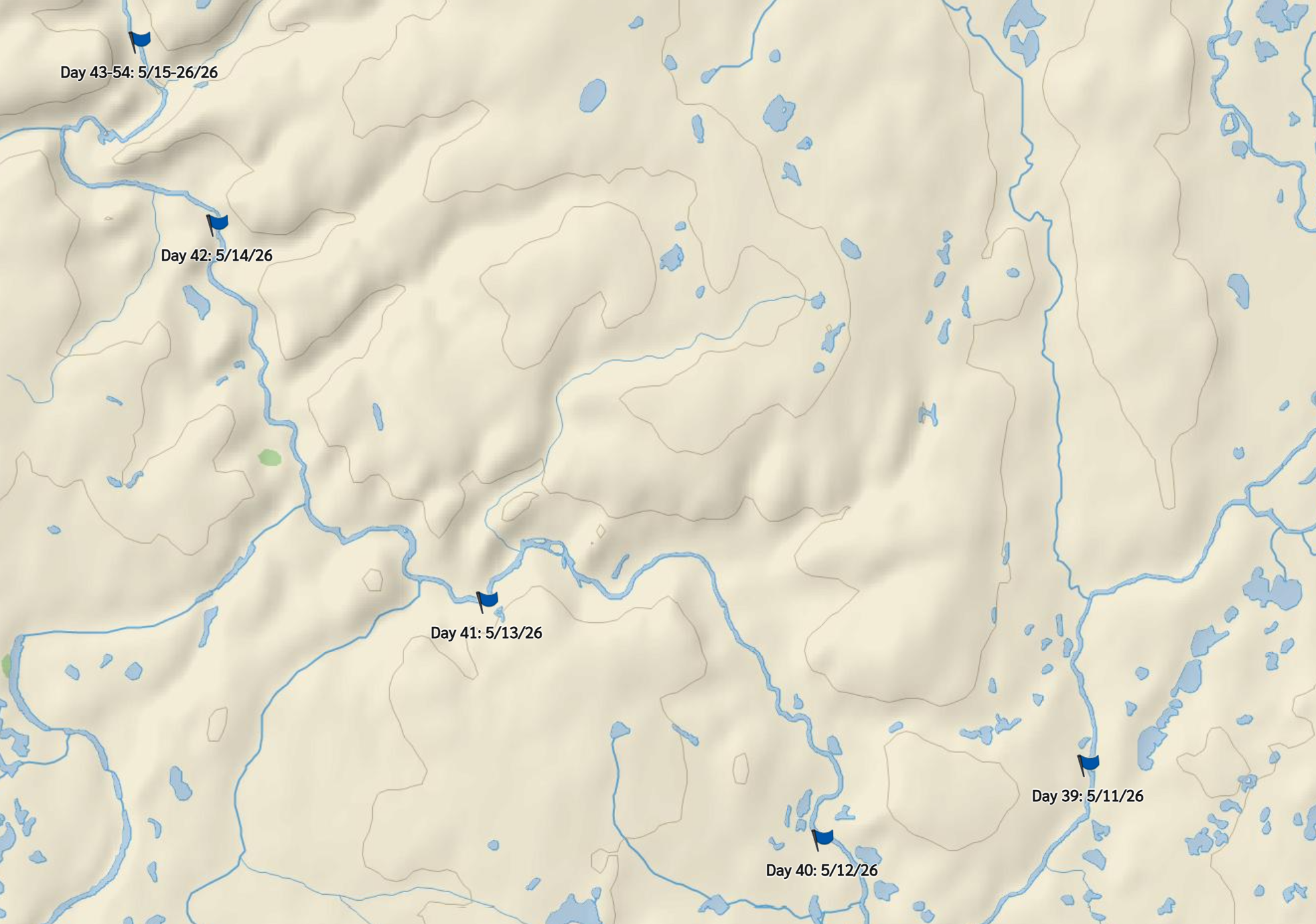
Will’s position is unchanging as the thaw continues and river breakup unfolds on the Horton. Visit Will’s interactive map for complete control of magnification and orientation.
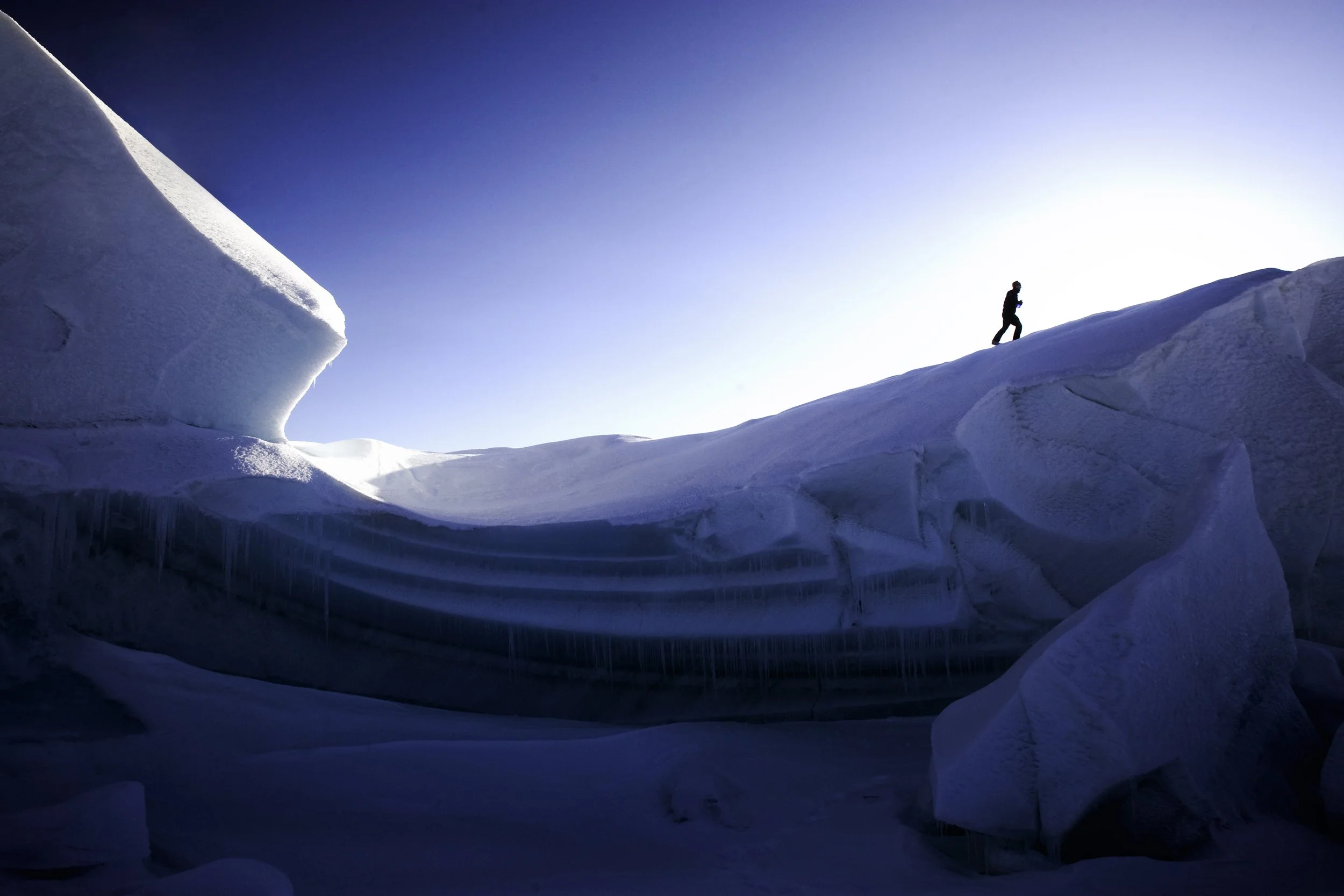
In today’s partial dispatch (audio cuts out), Will describes his evolution toward solo expeditions and role they play in getting him in touch with The Quiet Mind. This photo is from the 2008 Ellesmere Island Expedition.