
Day 47: May 19, 2026
Will observes weather having a bit of a fight with itself while deciding to relocate camp for the third (and presumably last) time during the wait.
-
Yeah, Will here, it's May 19th, day 47 here. This is the fourth day here of the layover here waiting for the ice. And as I talked about the last couple of days, we had great thaw, really sunny, really intense sun, up to 48 degrees. But it's still real intensity, a lot of water running down. And then this morning, early in the morning, a small light north wind came up, kind of a cool wind, and that increased a little bit. And then the morning sky, too, had these altocumulus clouds, which is an indication of warm weather. Because when you get a thaw, you usually get a buildup of warmer weather. And these altocumulus are an indication of that buildup. And in some cases, that builds into rain in a few days or so. So that was the sky said everything was coming along. But the north wind was a little bit of a wind, showed otherwise.
And then about three hours later, it must have been the upper winds were colder winds. And that stratified the cumulus. Cumulus is formed by heat rising. It rises and it builds up those pretty clouds on the top. And that's how they're formed, the heat rising. Well, when the colder weather comes, it stratifies it, and it stops that convection. The cumulus is formed by convection like boiling water, convection going up. But when you get the colder weather in, it stratifies the clouds. And then low clouds came in from the north and put a damper on the mood. And, however, the temperatures held pretty good. They were in the lower 40s, 45. The temperature didn't drop just below freezing, thank God. Or even into the 30s. There wasn't the intensity of the sun. Fortunately, it was still warm in the tent, the wait out of the tent.
And so I'm still hanging in here and see what tomorrow brings. But a little bit of a thaw. I mean, the water goes in a cycle that, it runs real hard during the day when you get the hot sun and so forth. And then during the night, it cools off. It freezes still here just a little bit. And then the water slows down. There's creeks that are continuing flowing, but their volume goes down, too. And the smaller little foliage stops. And then that picks up later in the day. That cycle goes until you get real warm nights or a rain. But that cycle was still there today. There wasn't as much water coming down. There's a lot of water coming down the river. I mean, I wouldn't say a lot, but it is measurable. I walked up about a mile. Where I took a lunch break four days ago, and there's a lot of open water there moving.
But the ice is anywhere a long ways from going. But at least in the last three days, it's started. And it broke that cycle, that cold cycle that we had here. My tent, I mentioned, I had dug a trench in the snow about three days ago to find a level spot. And not thinking there'd be ... everything would be thawed out. I knew I'd be vulnerable in a trench because the water collects there. And, of course, I probably picked the only real depression where it was. So I moved the tent today to a higher spot. And then because when I first came here four days ago, this was all two and a half, three feet of snow. I couldn't tell where there was any spots at all. But the higher ground has melted down enough around the trees and the mosses, have melted it down enough so I can tell where the flatter spots are. So that's what I did today is move my tent for the third time. And this will be a permanent residence. It's really a nice flat level, very comfortable. And very warm on the ground and I have some stability there.
And so we'll see what goes on here. I mean, I knew I was here for at least ten days. And the season goes on. That intensity, even though it's not making it through the clouds by the day, it's really getting warmer and warmer up here. Because we're getting much more light. There is enough light to read a newspaper at night. It does it right ... about 100 miles north of the Arctic Circle. So you get 24-hour light sometimes in June and early July. It does still set out here a little bit, but it's right below the horizon. So it isn't like we're experiencing any night at all. But that buildup of the sun, of that 24-hour light that's coming along pretty fast now, does add to the heat balance here of the Arctic.
And more and more birds coming back. A lot of company that way. And that's a nice thing here happening. So anyways, I'll check in here again tomorrow. It's Will here, May 19. Imagine the weather is wonderful. I talked to someone, Jerry Stenger on the phone, he said it was 90 in the city. So I don't know if that's nice or not. But I heard he got a lot of rain the other day. And so anyways, I don't even miss home, but I think about what the temperatures are when it gets moody like this here. And I'm keeping strong rhythms here to keep my mood up. And, well, it's over and out then, May 19th, to 47. Will here, on the Horton River.
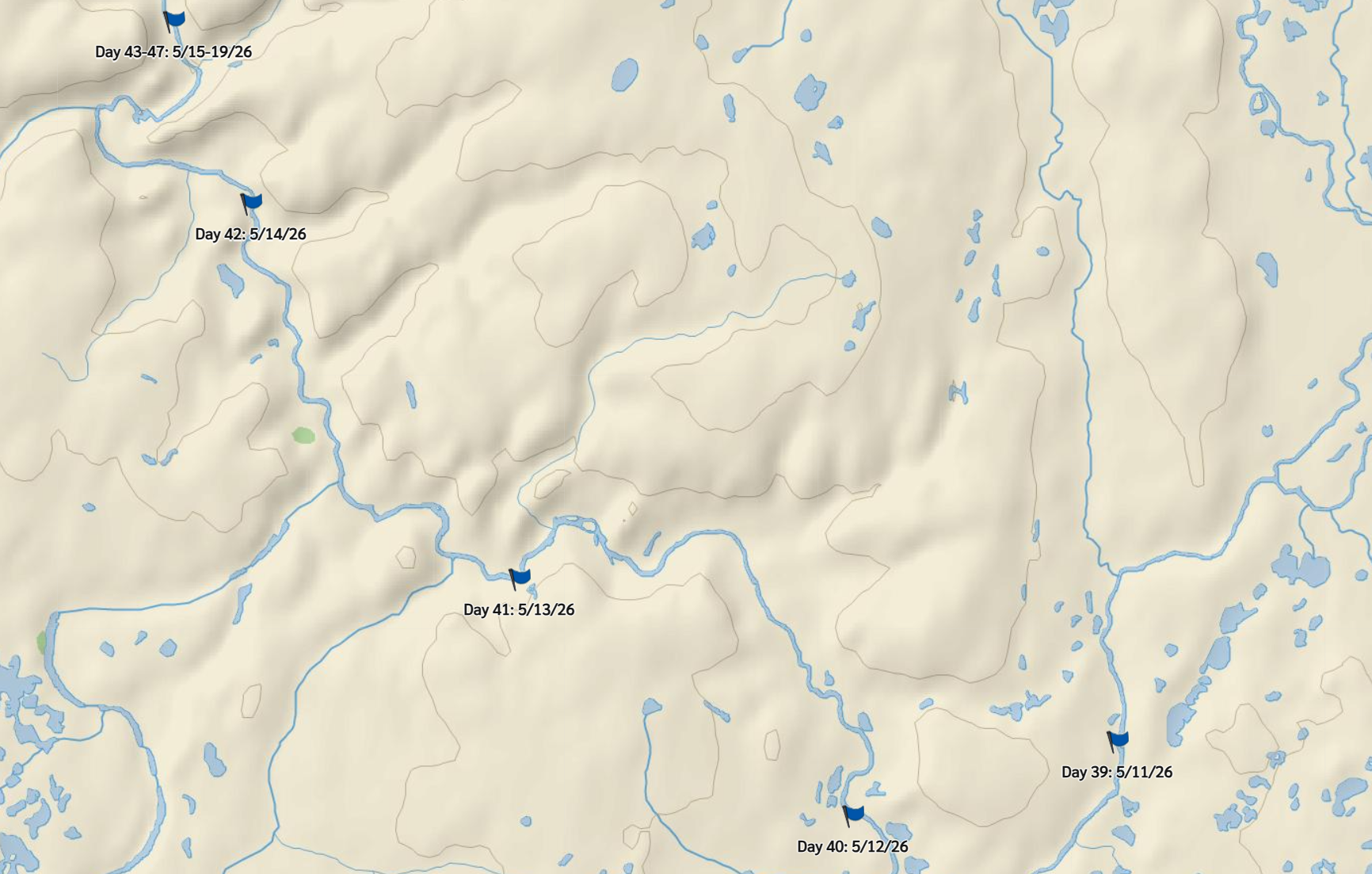
Will’s position is unchanging as he waits for the thaw to push the Horton river breakup. Visit Will’s interactive map for complete control of magnification and orientation.
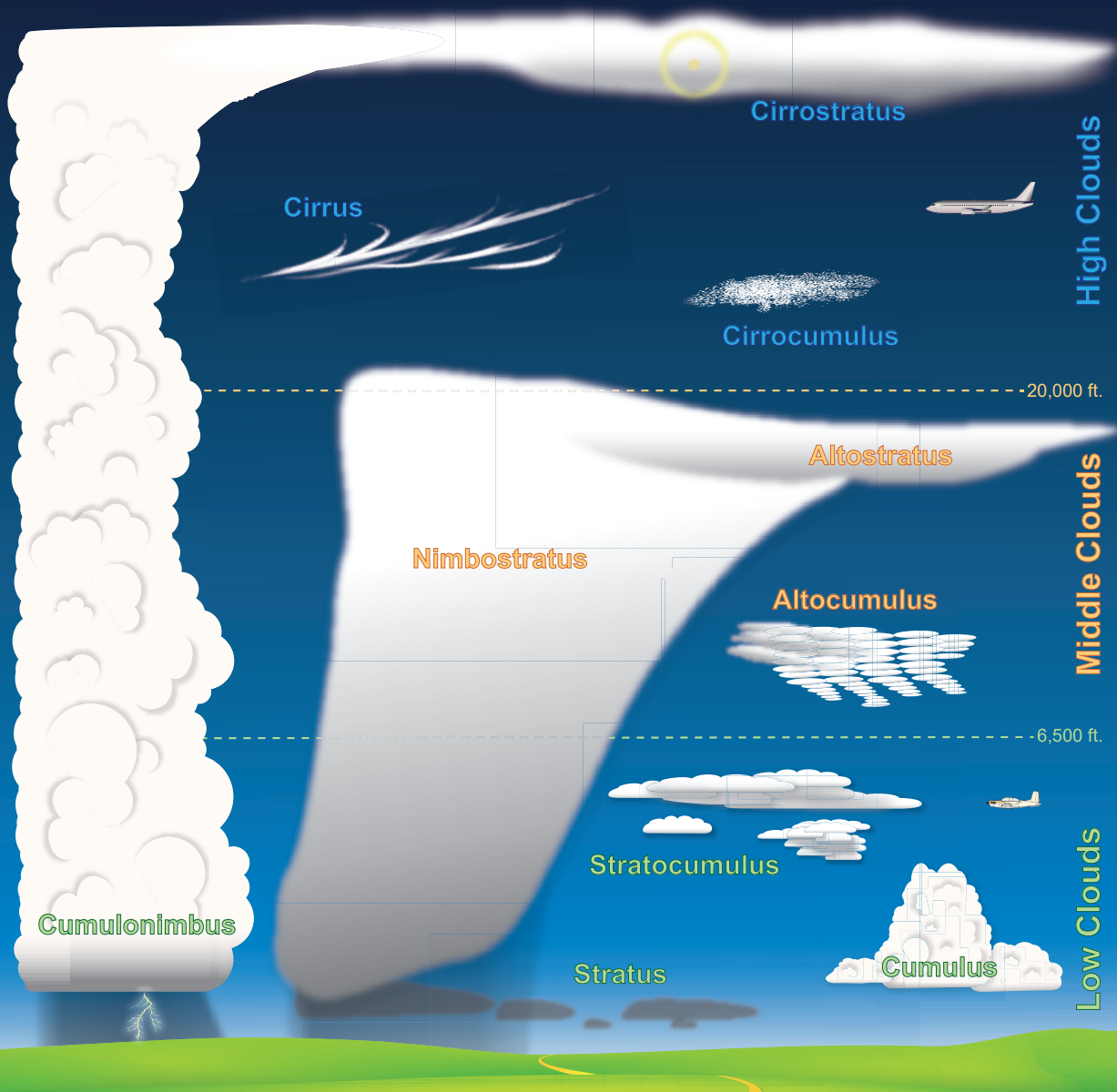
Will is playing meteorologist, reading the cloud formations to obtain predictors of the coming weather conditions as he tries to guestimate the Horton River’s breakup timetable. This excerpt from NOAA’s cloud chart provides a taxonomy of clouds. In today’s dispatch Will spotted altocumulus (middle right on the chart) in the morning.