
Day 46: May 18, 2026
The continued warm temperatures accelerate spring’s metamorphoses and trigger biological transformation all around Will at his campsite as he continues to observe the rapid shifts that come with the thaw, where “things happen very, very fast.”
-
Yeah, Will here on May 18th, day 46 on the Horton River. Yeah, and the second day of the big thaw. It was quite a bit warmer today. The temperatures were deceiving. It got up to 48, but the intensity of the sun, a lot of the snow is melting on land around the trees and that, and it's pretty intense, like the sun by the thermometer right outside, kind of in the sun was 70 degrees, not that it's that much.
But it is a lot of melting today, and I walked along the river and the marshlands are starting to, like a sponge, let go of the water. And just another beautiful day, altocumulus, which means really fair weather, warmer, looks like no interruption. This is looking like a pretty substantial thaw, there is [...] kind of the real cool weather now coming (at least for now), coming back. There's this nice south wind that's warm and not threatening, but it's just simply amazing how fast things change, and particularly the insects.
The first day I got here was about 4 o'clock, it was still cold, and it was about 33 degrees, and I went down the river to gather a few rocks for my stick fire for a fire pit, and it was warm, the sun was shining there, that rolled over a little rock, and there's a spider moving around. And today there was a lot of activity, different various insects that fly, they're not out and swarming by all means quite yet.
I saw a number of birds and so forth. But what happens here, the first layer on the ground, the first humus, it's about an inch thick: that'll turn into almost all insects, centipedes, crawling, insects on the top of the ground, flying, this will happen probably in about 3 or 4 days. I've seen this change on the Copper Mine [River]. And then that brings the birds up. There's a robin up today, and that's a new phenomenon, at least as far as I know. The last three expeditions up here, on the [... ... ...] robins as early as May 1st, and it's climate change probably. But what's in it for the robins is the insects, it's just, like I mentioned, that whole carpet of insects, literally. And so that's what they're looking for, plus here you have 24-hour light, and very fair temperatures. This is the western Arctic, and so robins are around now, and so it's a real rich time of the year, things happen very, very fast. Budding, probably by the time I leave here, who knows how long that'll be, but it'll be ... probably certain things will be budding and that.
The river is, there's water coming down to it, I mean, it's just still ice, there's water on the ice in certain spots, so it's still that kind little river, we'll see what happens here in a couple days. It'll be interesting, as this continues and the ice comes down. And I find, I also find the moose, and again, the western Arctic, to the west of here is the boreal forest, so we're right on the edge of the boreal forest right now. Actually, as you go further north, in the river valleys, you still, you have [...] all the way to the Arctic Circle, going to the west. And I've always been tracks of wolves and so forth. And, well, it's been a pleasant day here, I'm still kind of organizing myself for ... I have this long hike out, really questionable terrain, and I'm kind of getting everything, my gear and everything all ready, so I'm set to go on that. I don't have to think about that right now, so it's a beautiful, beautiful spring day, and so, I'll tune off here, and I'll check in tomorrow. And it's Will, on May 18th, day 46th, Horton River, over and out.
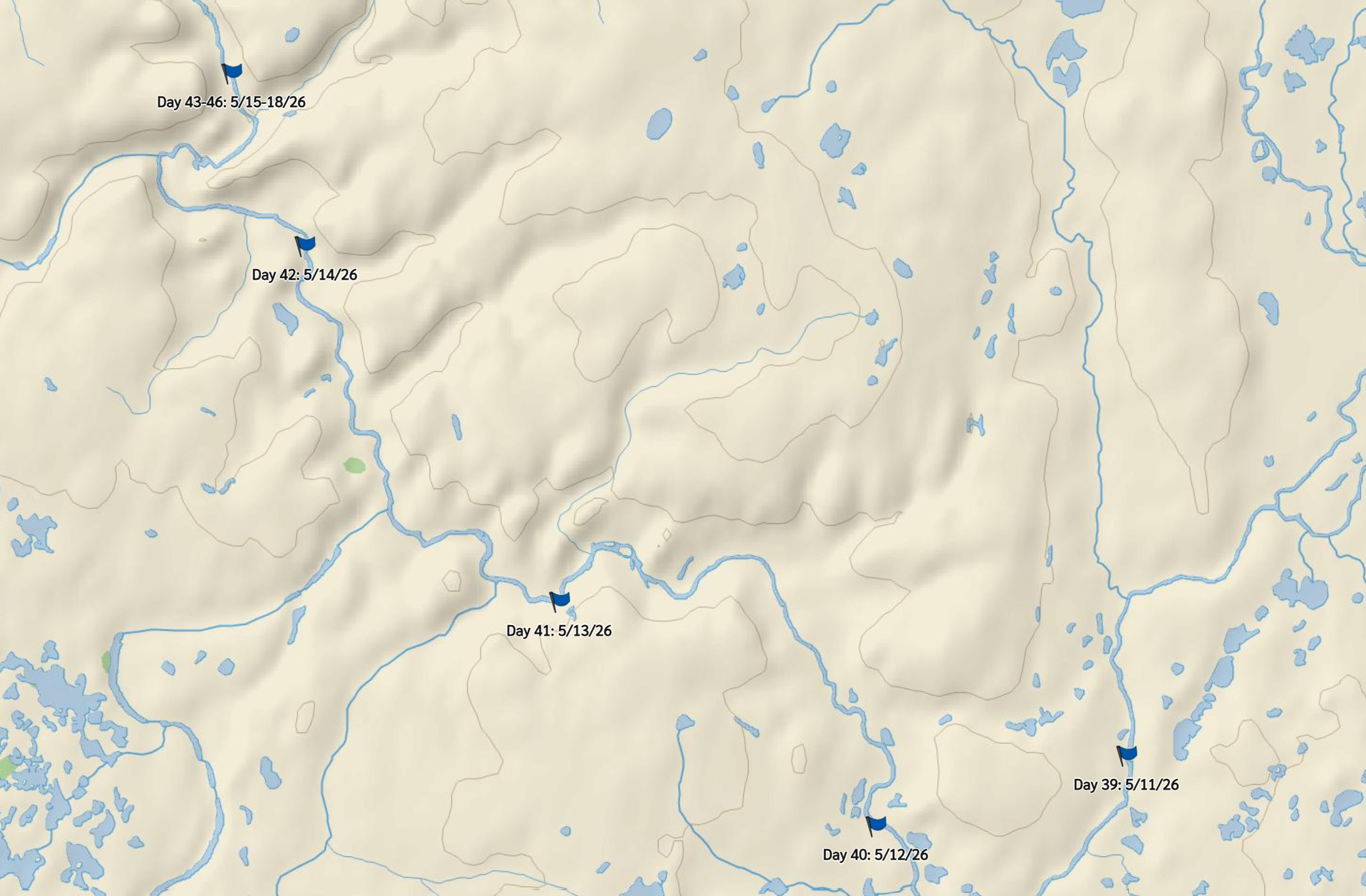
Will’s position is unchanging as he waits for the thaw to push the Horton river breakup. Visit Will’s interactive map for complete control of magnification and orientation.
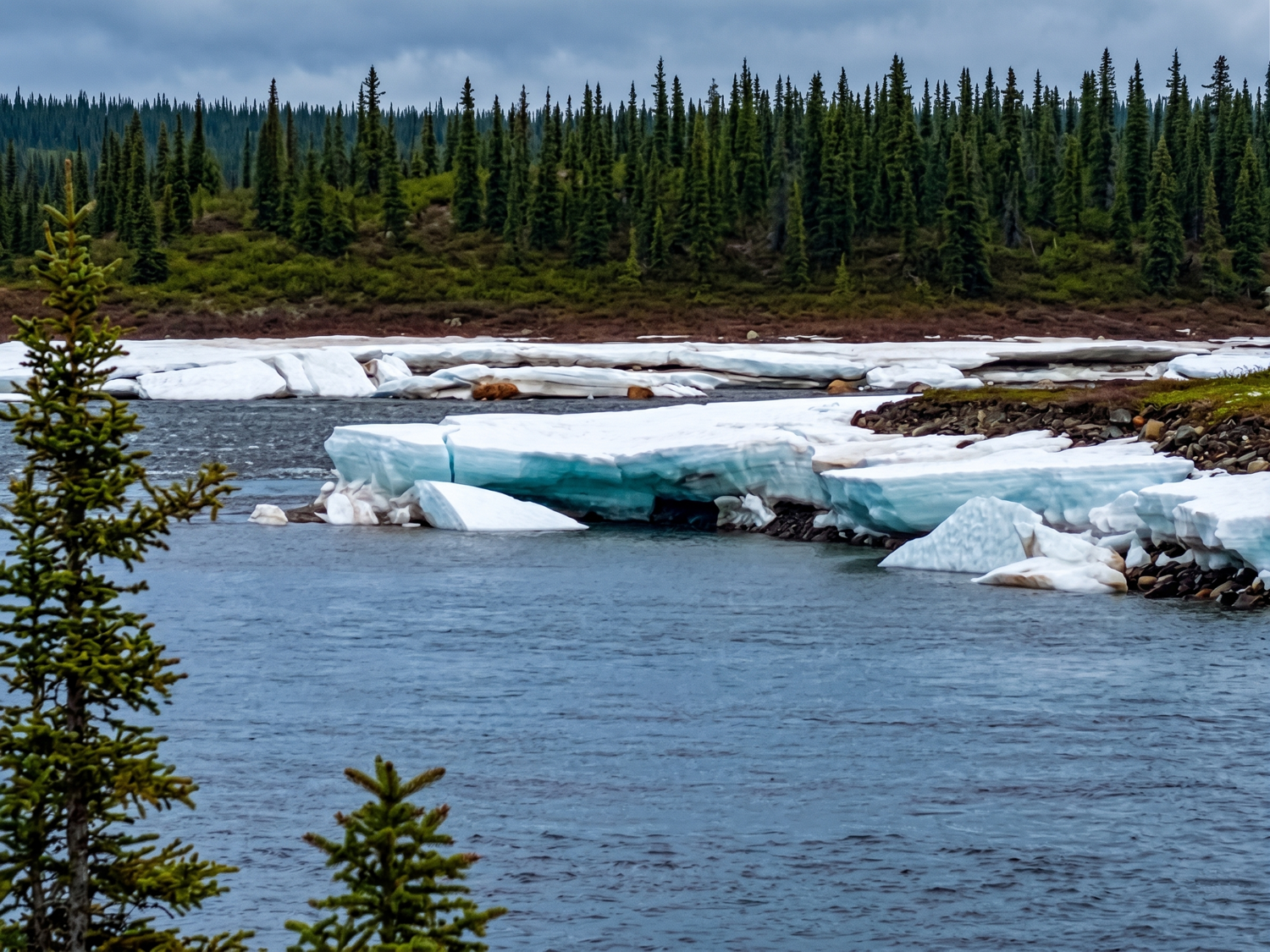
Thaw and river breakup on the Coppermine River during Will’s 2022 solo expedition—mentioned in today’s dispatch. The Horton where Will is camped, unlike the Coppermine here, is still mostly frozen.