
Day 40: May 12, 2026
After 40 days of nonstop travel, the landscape is becoming a navigational game of “avoid the slush” and make as much progress as possible before the breakup, which will be “one of these days soon, it could be tomorrow.“
-
Will here, May 12th, actually day 40 on the Horton River. Got up at—slept in a little bit—got up at 6 a.m. I was out in the river at 7. It was quite cold last night again, which was good for me. It really hardened the crust and froze up some of the overflow, some of that just really shallow water that was on the ice froze. So it was good travel the first couple, three hours. But now as the river is flowing more, I mean, as it's getting bigger, the topography is getting larger, hills and so forth. But in the cut banks, and the outside of the cut banks, the river goes around a bend, it has all the current on the inside. And these areas here in the north, they're usually gravel and rocks and stuff like that. So those outside bends on all the rivers, most of the rivers like that, are steep. And this is where the danger is with the slush. When you get a steep bank, you have the wind blowing the snow over that bank, and you get these large snow drifts in the bend of the river. And the slush then gathers underneath that snow with the weight and that. So there you have a combination of, on the outside bend, these drifts with real slush underneath that, which is extremely dangerous. You usually have to avoid that.
But in traveling like this, I always go on the inside of the bend. So when I see one up ahead, whether the cut bank, and then I always try to cross the river and get on the safer side. But as this river continues to get a little bigger, there isn't any water flowing under the ice at all. It's all frozen, but it's stuff that's coming from the melt water. But as it's getting larger, you sometimes have cut banks on both sides, and that's where your options are limited.
There's another type of slush. It's kind of a brownish slush. It's water that's seeping from the land. It's the first water that's starting to flow. And when they come in, when that flows out, especially where there's any type of a bank at all, it's extremely dangerous. And this brown ... the water from that keeps seeping throughout the night, so it's gathering. So I travel a lot by the ... I can tell the ice very easily by the color. And the brown slush, and then you have this on the outside bends, you know, where you have the real deep slush. That's always kind of a baby blue, beautiful blue color, and you can see that. I mean, there's just certain places on a river, like you don't walk in front of a school bus. I keep out of the outside curves and so forth.
But it's starting to limit actually where I can travel now on the river. And there was one point today where there was an outside bend and deep slush on either end. It looked like, you know, that was it for me. But I was able to navigate the snow drifts on the outside. I caught it just in enough time. There was still a crust that was quite steep. First, I didn't think it was possible at all. In fact, I didn't even consider it. And I thought, this is where I might have to shut down here. But then I looked at it closer. And because it was ... it had just been forming, it's still maybe three feet deep and pretty dangerous. So it wasn't anything like too serious to go in. It would be with skis. But there was still a crust on it, so I navigated that. And I thought I better start looking for real estate to start figuring out where I'm going to wait it out. And then the river changed again. I got into some much bigger incised areas. This eventually goes into, like, canyon lands. If you get on the satellite view of it, you can go upstream more where I'm heading. You'll see these incredible canyons that I'll be going into.
But that ... so the land is getting bigger. And there's more snow on the river now. I mean, this has just changed. Deep snow with a crust, which bridges all the, most of the trouble I've been having. And the hills now are quite large. There's trees, you know, here and there up there. But there's still a lot of snow that hasn't melted. It's almost like I traveled into wintertime here again with the snow. So the breakup is quite a ways away yet.
And the sun kept coming out. It looked real promising. It's still trying. It didn't get above freezing today. But it's still a lot of energy in that sun, once that ever does break. But it seems like I'm losing some elevation. But that's the great thing about adventure. You don't know what's going to happen the next day. And especially right now, especially in a river and changing, it's real exciting, and all sorts of obstacles. I have a lot of experience in this. You know, there's a lot of nuances. And you've got a quiet mind all day. I mean, I can spot the most subtle thing like right away. And you just simply avoid the real danger. And I don't have ... I used to haul a canoe sled. And it was [...] for about 10 years. And this I could travel, in this stuff real easy. But I don't have the option because my sled's maybe three inches. And that's all they can go through. And so I'm pretty limited. But one of these days soon, it could be tomorrow, I may get stopped here. And that will be a wholly different story all of a sudden not doing anything. I do have some concerns here on how long it's going to take to break up. But we'll, you know, I'll deal with that when it comes here. And things can change, like, real fast here.
But I'm safe. I had one of my best sleeps last night. That's why I decided to get up at 6 instead of 4. I've been really pushing myself so early in the morning to get the miles in me. I wanted to get to where there's trees where there would be a proper protection and where I could get fire for the big wait for it to break up. And I'm now into that area or getting into it. And that's why I've been pushing really hard is to get into a place where I can make a real decent camp here. So we'll see what happens now. And so, this is Will here, May 12th, day 40, big 40. I've been pretty much going nonstop with [...] conditions here. But there will be a big wait here coming up. And it's Will and over and out.
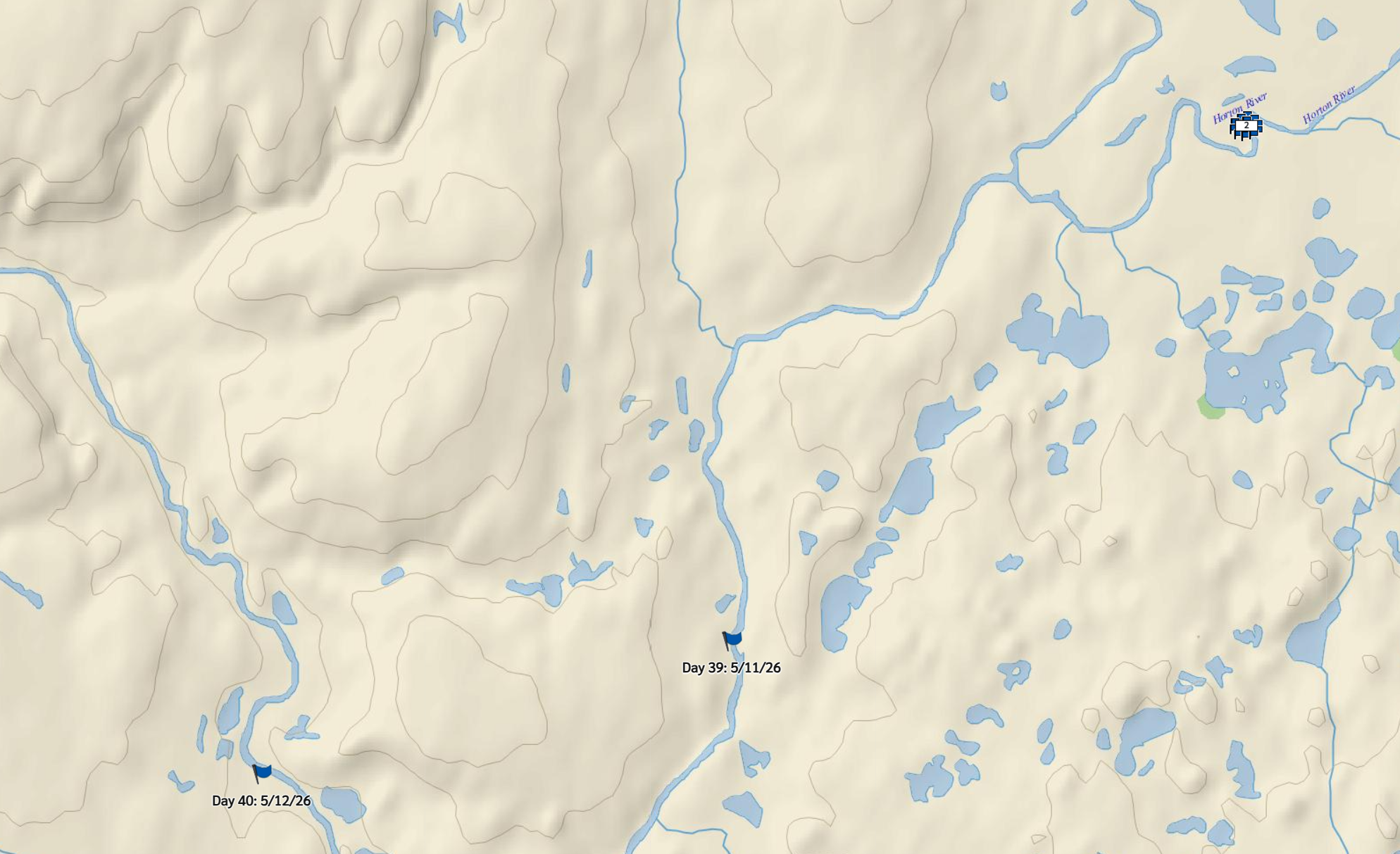
Will is pushing to reach a more heavily wooded area to find a good camp site and available fuel wood to wait out the spring breakup on the Horton. Visit Will’s interactive map for complete control of magnification and orientation.
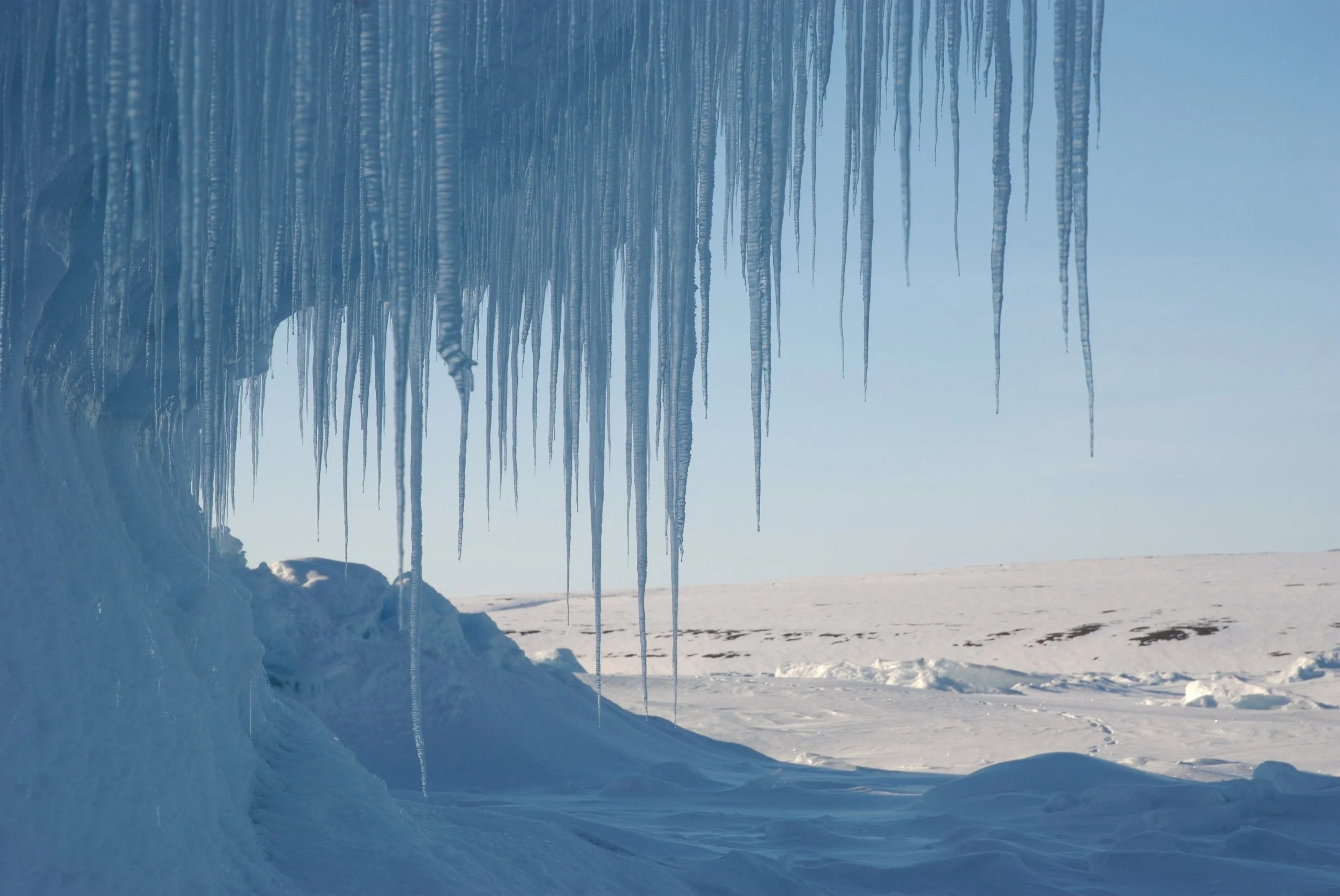
In today’s dispatch Will describes the formation of slush under snow banks and brown slush as signs of spring. Another sign of spring’s approach, seen here on the Ellesmere Island expedition in 2008, is the formation of icicles.