
Day 37: May 9, 2026
Will marks off 20 miles and reflects on how essential it is to have a quiet mind to do it.
-
Yeah, Will here. It's May 9th, 2026, day 37 on the Horton River. I got up at 4 and was out and hauling by 5 a.m. It was a cold morning, windy, cloudy, and actually a bit of a windstorm when I started. It was a cold start. The knots, the lines were all frozen up, so it wasn't a nice start at 5 o'clock, but I did keep moving like that, and it took me a while to get my hands warmed up once I got moving. Then I was in the groove again, and it was actually a pretty day. The sun ... the clouds broke for a while, but the wind was persistent. It was at my back most of the time. The river wound around. The first couple hours, and maybe the second hour out, I found my first geese, some tundra geese, a small little flock. That made me really feel good I had company. And then as the day went by, I saw more geese, and now were encamped. You know, there's a lot of geese around, so it's nice to have company. It's a sign of spring, and at least geese are betting on spring coming.
It's been a 10-hour day. I travel from 5 to 3. I had fantastic travel conditions, especially the second part of the day. The surfaces were more icy, really good travel. The river wound around a little bit. I must have been close to 20 river miles and took a couple breaks during the day and had my first experience with some overflow. It was nothing dangerous, but kind of woke me up to the situation here.
The surface conditions and that have improved a little bit, I think from the divide, I think I'm traveling ... when you travel west here, it gets warmer. And I think I'm a little bit lower elevation, by 300 feet. I'm, what would it be, around 1,200 feet now? It might make a difference. But just the conditions ... I wouldn't even say are starting to thaw, but there's the first signs of it. But there's ice on the, ice on the ... that's from the wind, wind-blown snow off of the river. And then that ice, the snow on that thawed a little bit.
And, but it was real beautiful. These, you know, going early mornings and stopping mid-afternoon. It's warm in the tent, and I'm just thoroughly worn out and exhausted. It feels so good just to lay and kind of go in and out of dreams and reality, and hear the geese. And I usually take that first hour off just laying there. And it's, the type of exhaustion is just really, really mellow. And as long as I'm eating right and sleeping, I think I've corrected the, hopefully that, the sleeping, sleeping mattress issue. It was a problem, it seemed to be around the valve, where I suspected. I glued that. It seemed to hold last night. I'll know more of that tomorrow. But having consistent sleep, if you can maintain your sleep and your food and get into the rhythm like that, you can go pretty much consistently. You know, you have to take your days off when you need it.
I was asked to talk a little bit about the, give an example of the quiet mind. And, and I think a perfect example was yesterday morning. I got up at four. I was going to do .. the reason I get up early, I try to get the crust. And it's a real fast travel. And then that crust, you know, gets soft later in the afternoon. So you've got to get up early to catch that. And I had traveled four straight days before that. And, and real hard days, long, long days and relays and snow. And, and during that four days, it became obvious that this river is, this country is not going to break up early. And I had to ponder that. And so, yesterday morning was day five. And I had this momentum going. And I had made the oatmeal, the thermoses ready. I packed up. And I just was feeling off. You know, just not quite ... I'm pushing myself too hard here. You get this expedition momentum, which is necessary. But you can't have it like a wild horse. You can't have it take over. You know, you gotta, you gotta be wise. And ... but I had these things on my mind because I had to make some changes and questioning my fuel. And then, do I have enough food? And this was sort of on my mind. And I definitely did not have a quiet mind yesterday morning because I needed to make some changes. And I just realized, no, I'm not going to travel. And I packed my sleeping bag and filled up that trusty air mattress and laid down and slept for five hours.
And then during the day yesterday, then when I was a little ... much better, quieter mind, I had to really re-evaluate all the routes. And particularly, I have two routes. One, one route would be going all the way to the ocean and then traveling along the ocean to Paulatuk. That one is a lot of variables. The other route would be rafting, rafting if it is raftable, the canyons and then hiking out. Both are serious routes. But I had to make a decision on what am I, what am I doing? I had to lay out a plan. So I studied the maps, did calculations. I did that all day long in a real, realistic way. Because when you make these decisions, if you run out of food or you run out of fuel, these are real problems. You know, it's a little bit more ... I would say if it gets to you when you're stressed, it's a lot of, it can be pressure. And that pressure also and that concern can really jimmy your rhythms where you're not sleeping and so forth. So that quiet mind is really essential to keep that going, keep your energy right. And I felt I, I made the proper correction, particularly with the food issues. And I did sleep good. I had a good peaceful sleep last night.
I was going to get up at five. I had the alarm set for that, but I just thought, I had a good sleep, I got up, that's why I got up at four. But another thing too is, when I'm in rapids, sometimes you hear rapids in the distance, a canyon or something you're going to go through the next day. When you go to bed that night, it can easily spook you. The sound of rapids and stuff in the head. And that's why this quiet mind is real important. Because in situations like that, it's obvious ... you've got to ... the worst thing you can do is have a bad night of sleep and then go down to some dangerous rapids the next day. But the quiet mind here is always real essential. It's essential for leadership. Anything that I've ever done, if you don't really have a quiet mind, you're not an efficient leader. And I think, I think that's an obvious statement. And I think everyone knows it, but it's really hard to achieve that, that peace of mind in your mind and act out of that, out of that quiet mind. So ... and it's also one reason I take these long expeditions. I really need to just get into a different environment. And there's no guarantees on expeditions. And when I come back, I'm just totally a different person. So anyways, I hope that all came through, and that all recorded. And it's Will here, May 9th, day 37. Over and out.
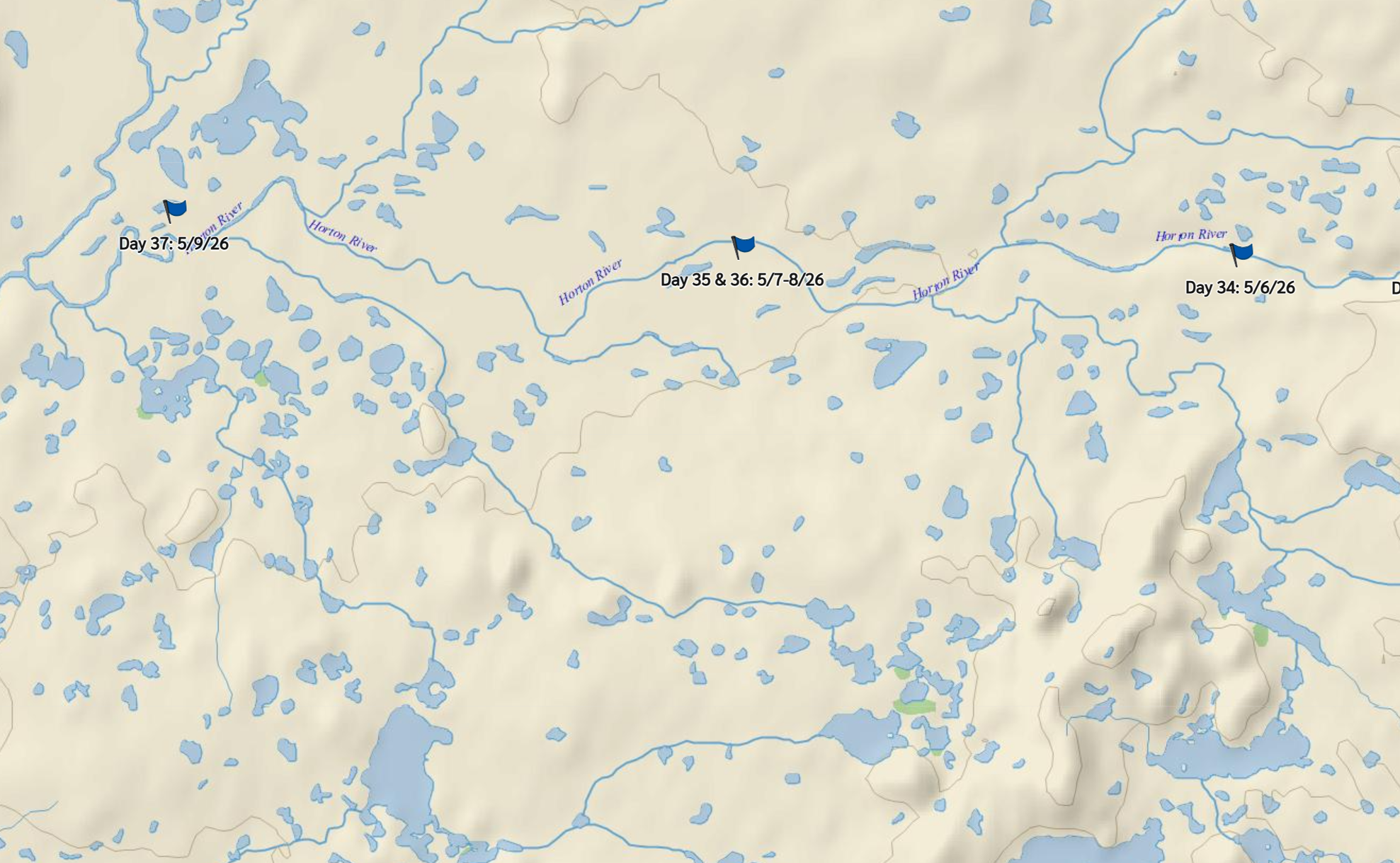
Will continues to make good westward progress over crusted ice conditions. Visit Will’s interactive map for complete control of magnification and orientation.
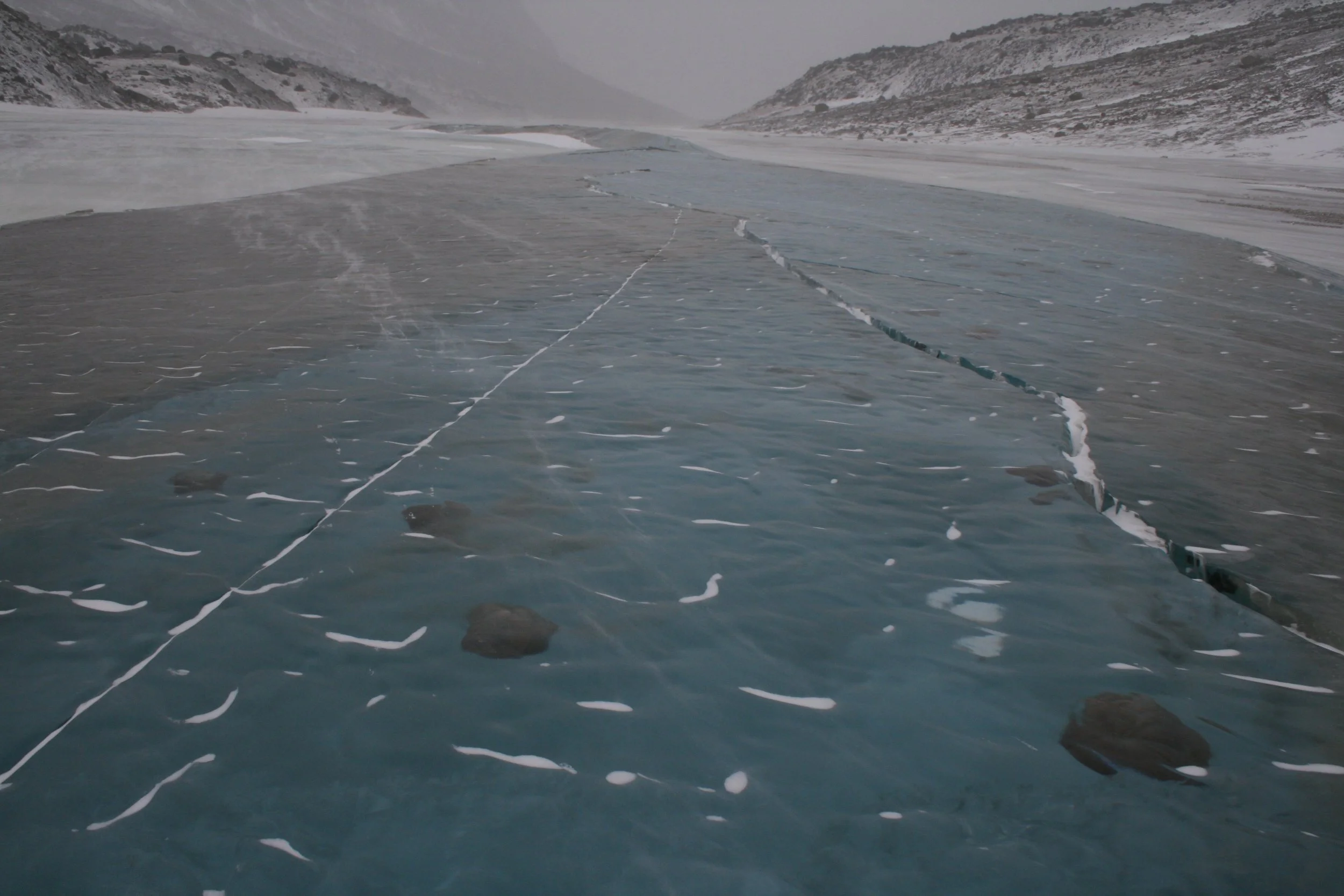
A frozen river on the Baffin Island expedition in 2007. Signs of spring breakup are of foremost concern as Will had his “first experience with some overflow” in today’s dispatch.