
Day 34: May 6, 2026
The "balmy" spring weather includes an encounter with a beautiful black wolf but softens the snow which, in turn, instigates a planned shift in Will’s travel strategy.
-
Hello, this is Will here. It's May 6th, 2026, day 34 on the Horton River north of the Arctic Circle in Canada. Last night I mentioned it was a tremendous wind getting my tent up. It was challenging, but always very doable. But overnight it calmed down a little bit and it actually rained a little bit around 4 or 5 o'clock. It was the first real kind of a, like a spring rain, nothing heavy. I was hoping for like two inches or something to wash the snow away, but it was raining and I slept in until about 7:00. And then when I got outside it was just a gorgeous balmy weather, which was like 40, with this blue sky and cumulus clouds, which is a warm weather clouds. You don't see that. They're probably the first cumulus clouds up in this area. And it's a fair weather spring and summer cloud and definitely it looked like that weather was coming up from the forest south of here, which is the forest that's lost all its snow. And it's a heat sink because of all the trees and that. So it's kind of the weather I was really hoping for.
So I was really energized packing up today and getting going. It's gorgeously crystal clear and not much of a wind. And I'm in this beautiful kind of a valley, canyon valley-like situation here, steep sides on either side. So I was hoping to look forward there today. And then I saw a large black wolf of probably about 100 pounds. The wildlife, as I mentioned yesterday, too, is pretty active. A lot of caribou are coming around. I haven't seen them, but they're fresh tracks. What the animals do is that these are small river valleys, just hills, basically. And the animals, like the caribou, they'll cross it. They'll go down the hill, cross it, and up the hill. And the wolf does the same thing. It doesn't run parallel with the ... most of the river, most of the animals just go up and down. They don't run it parallel much. I mean, there's exceptions to that, of course. The wolf then does the same thing.
But this wolf was interesting. He was upwind from me and didn't have any idea I was around. So I watched him for a good 20, 25 minutes. And he first was up in the hills and then coming down. He was messing around where the caribou tracks were. And since it was such a gorgeous day, at least at the beginning, it was starting to melt off around rocks and brush and grasses on the valley where it was facing the sun. So what the wolf was doing was checking out these open, freshly open spots, probably looking for mice or lemming or other animals who were out enjoying the feast for the first time in seven, eight months—the smaller animals like that that they prey on. So he went up the hill and then down the hill, came back up the other hill. And it was just a beautiful animal, just real gracious looking, with a beautiful coat on it, about a hundred-pound animal.
And about one o'clock, clouds came in, the west wind came in—kind of threw the water on the fire here for a while. And then it whited out, which made my ... difficulty because these heavy, these heavier loads, you really have to know, follow the ground. You know, there's drifts around. They're not high, but you've got to navigate while like hauling this 200-pound load, especially at three sleds. I mean, that's the ticker. The sleds are about six feet, and they're in tandem. So, you know, you have to get a momentum, kind of a momentum going. And if anything, like a steep drift ... really slows you down. And so I lost visibility, at least on the ground. And it was really tough going in the thawing snow.
So I decided I'd quit a little early tonight, and I'm going to get up early tomorrow, probably about 5 o'clock, get out about 6, which would be 5 sun time, and try to hit the frozen surface. I think it will freeze tonight. And a typical spring travel, sometimes in the north, you travel at night like that to get the frozen surfaces. So I'm going to give that a try tomorrow: get up earlier, then probably quit earlier. And then if that works out, I probably will do more of a night schedule, maybe get up at 3 o'clock or so and travel until, you know, noon or 1 o'clock, which is a beautiful time of the year. The last expedition on, when I crossed Great Bear, I was traveling nights, like that. Nights, you know, keeping in mind it's 24-hour light all the time now.
And so I'm on the Horton, and the snow is, it's still got a ways to go, but at least it's thawed for about 3 inches. And some of the ice on the river is starting to be exposed, which is good. That's good travel. And then basically, you know, traveling every day, day after day, my activity every day is I just watch the surroundings all the time. You know, if I'm relaying or whatever I'm doing, I can be going, making good mileage in a straight line or not making good miles or triple relaying. I'm just always just watching and observing and beautiful, you know, presence. Regardless of how tired I am or whatever the mood or whatever, I'm always, you know, observing the small changes now, especially in the springtime. But, it's trying to be spring. You know, who knows what's going to happen here. So I'm going to check out here, and I'll call in tomorrow. But this is day 34 already, and Will, over and out.
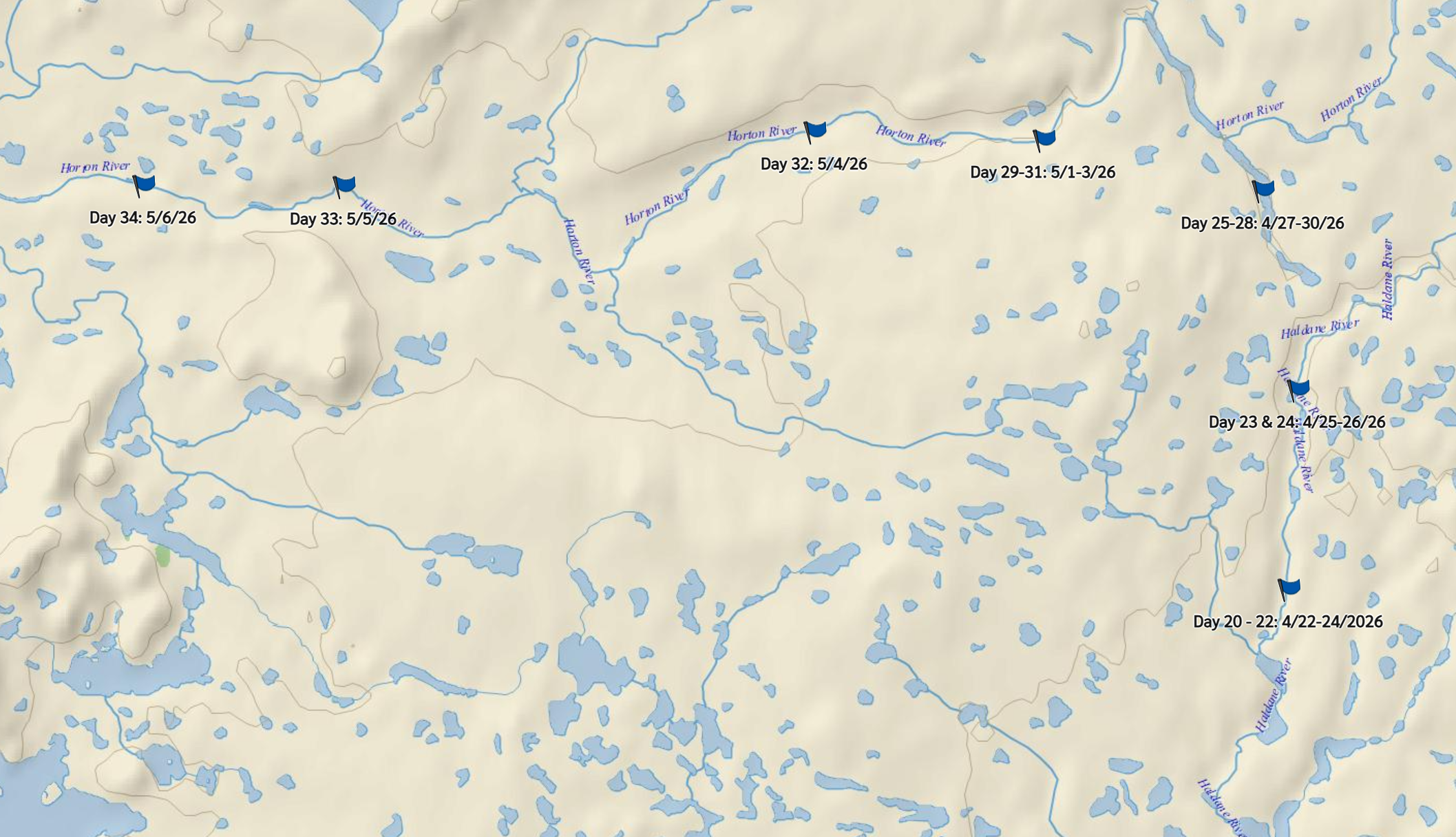
Will continues his westward jag across the Horton as more signs of spring emerge. Visit Will’s interactive map for complete control of magnification and orientation.
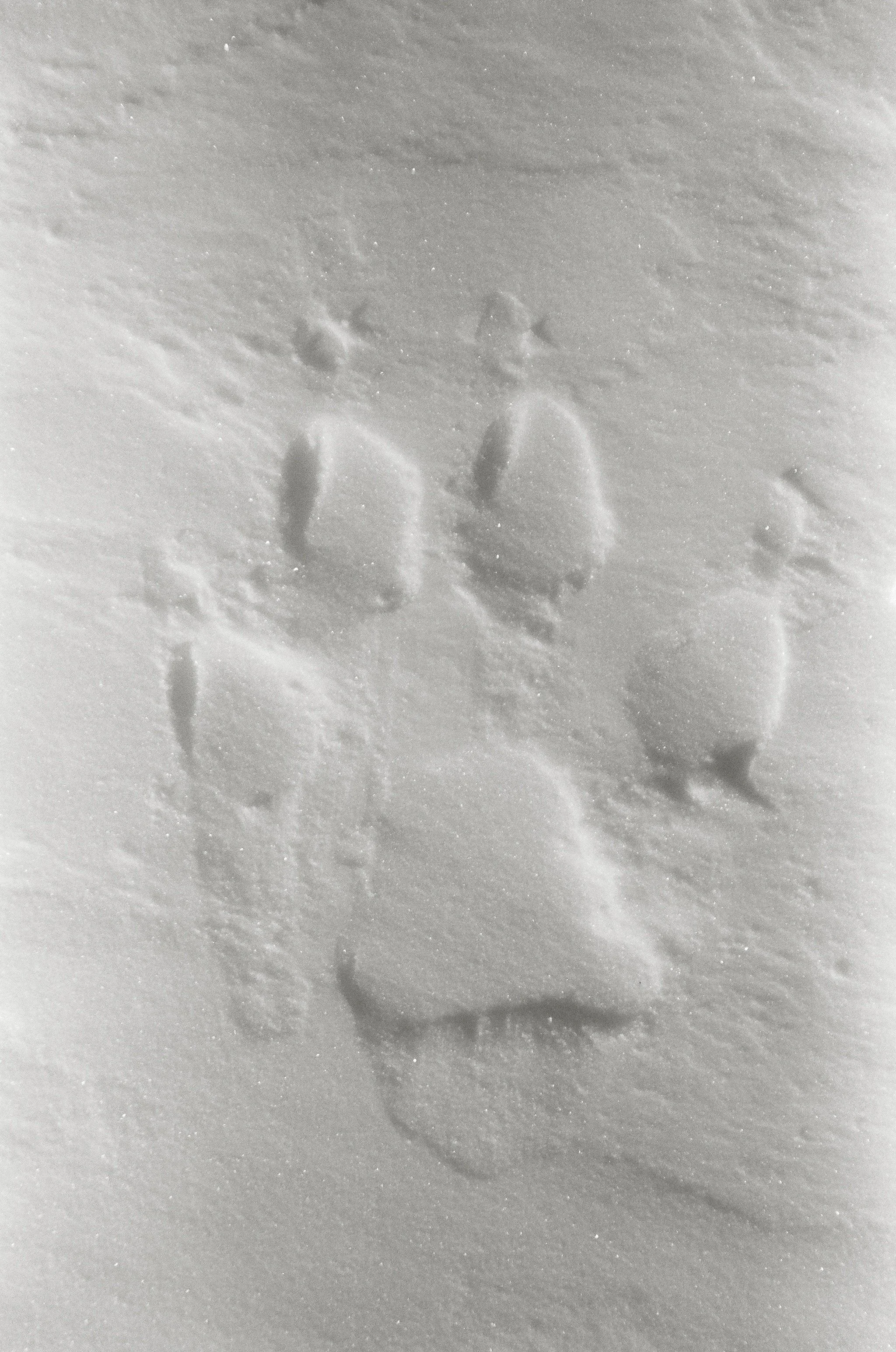
“I'm just always just watching and observing.” Undetected, Will gets the chance to eye the progress of a 100 pound wolf across the river bed in today’s dispatch.