
Day 33: May 5, 2026
A new gear on Day 33: beautiful conditions and, later, a massive tailwind prompt ditching the relay system to cover 10 straight-line miles in a single 11-hour push.
-
Yeah, hello, Will here. It's May 5th, day 33 on the Horton River here. Fantastic morning. It was clear last night, beautiful twilight colors, crystal clear in the morning, 17 degrees, everything above zero. And all the surface that was thawed froze up. So I took advantage of the good surfaces today and also the visibility. And I traveled about ... I hauled about a little over 11 hours. I covered 10 miles plus in a straight line, hauling all three sleds in one load, no relays today. And it started out really pretty clear. But then the east wind came up quite hard. Picked up to almost 50 miles an hour, maybe a little bit more. By the time I was quitting, around 8 o'clock, 8:30—I kind of went long. I was hoping to find some sort of shelter or drifts or something like that. But it was all wide open, straight shot with wind all day, which was to my advantage because it was a tailwind and in good conditions. It was still a heavy load. So it was great making progress. I took three 20-minute breaks out of that 11 hours.
One thing that really attracts me to expeditions is kind of the ultra-physical shape you get in, hauling and working out, kind of a consistent workout. And that's what I'm doing right now in hauling 10-hour days, maybe 11, trying to do it consistently now, especially now without the whiteouts. I can possibly go single loads. That's a pretty heavy load, though, 200 pounds, three sleds. It's quite a caravan of gear. And then also setting up the tent was very, very tricky. It was taking 50 miles an hour at that time. And like I mentioned, no protection. Ice, I had to screw in ice pitons. But it's very meticulous setting a tent up, especially a wall. And that's one of the problems in a solo—in storm winds like this—is setting up. Taking down is not too bad, but setting up—because you can lose the whole tent. Or these tent poles, too. If you don't do it right, you can bust up poles, which would be another major problem.
And it was warm, too, warm. You know, it was above zero, the temperature wasn't too bad, and there was light. I mean, I've done this a lot with, you know, freezing temperatures 30 below and at night. And, you know, flashlights not working. And some of the most horrendous setups I've been in. But it still was … being alone like this, you've really got to be careful. I use this Warmlite Stephenson tent, which is a fantastic tent. I mean, it's good for anything. You can throw at it 130-, 140-mile-an-hour winds. I've been up in a 100-mile range with this tent before. You wouldn't want to set it up alone at that, you know, those winds. But it's a very, very strong, very super light ... it's just a beautiful tent. But you have to be careful with it because it's easy ... it's delicate, in a way, really delicate. But it still withstands any type of wind or storms you can get at it.
It's interesting, too, now, the last couple of days with just a little bit of sunshine and a little bit of more freezing, the brush and the grasses are starting to evolve in such a way that the tops of the grasses and the very tops of the brush are right above the snow and they're drifted hard. But as soon as they get that energy, it starts melting. And I've noticed the animals now are becoming very active. There's a lot of caribou tracks. I haven't seen caribou yet. A lot of tracks are going back and forth, digging around. The rabbits are out. Ptarmigan is the bird. They're like a grouse. It's a beautiful white bird. They're a year-round resident here. They've been quiet up until two days ago. But they're getting all [...] up here already, getting set up for their mating season. But a little bit of food like that, just a little bit of sunlight. And then all these animals that, you know, have survived so hard over the long winter, essentially this is over now for them. So it's a land of plenty back again. And they're not in the mating mode yet, but they've got the energy and they're feeding and part of that.
And it was, you know, it was a long day. It was really great. I just love traveling like this, and I like being consistent with it. I didn't get in the tent until around 9 o'clock, and it's about 10:30 right now. A little late. But I pushed it a couple hours longer, you know, looking for shelter. But I was really motivated because the conditions were ... it isn't very often you get a 50-mile-an-hour wind at your back. And it's like you're flying. If you were just skiing, you would just take off like a sail. You know, I'm anchored down by the sled loads. But it still helps in the hauling. And also you wouldn't want to go against this wind. In fact, it would be pretty difficult to do it. There wasn't any wind chill. You know, it was like I say, above freezing. A weather system did come in. There's still the strong east winds right now. High-level clouds. Cirrus basically has the markings of a warm front. But you never know. I'll know a little bit more tomorrow. So I hope this is coming out clear. My batteries were low here. And I think the batteries should have lasted this call. So anyways, I'm in really good shape. Sleeping good, eating good. I mean, couldn't be more healthier. And I'll check in tomorrow. So this is Will on the Horton River, May 5th, Day 33. Over and out.
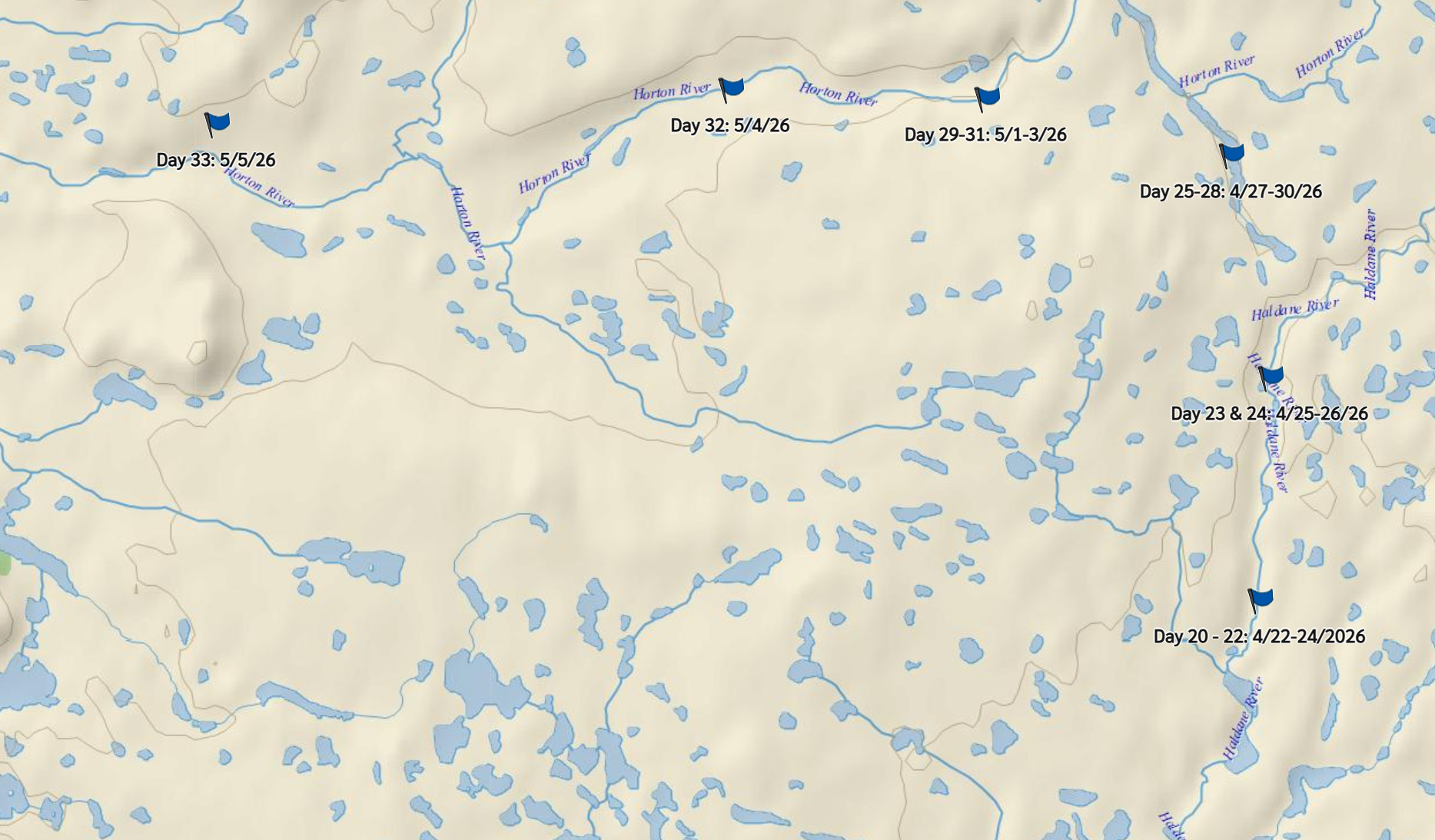
Will made approximately 10 miles of straight-line progress in one load today. Visit Will’s interactive map for complete control of magnification and orientation.
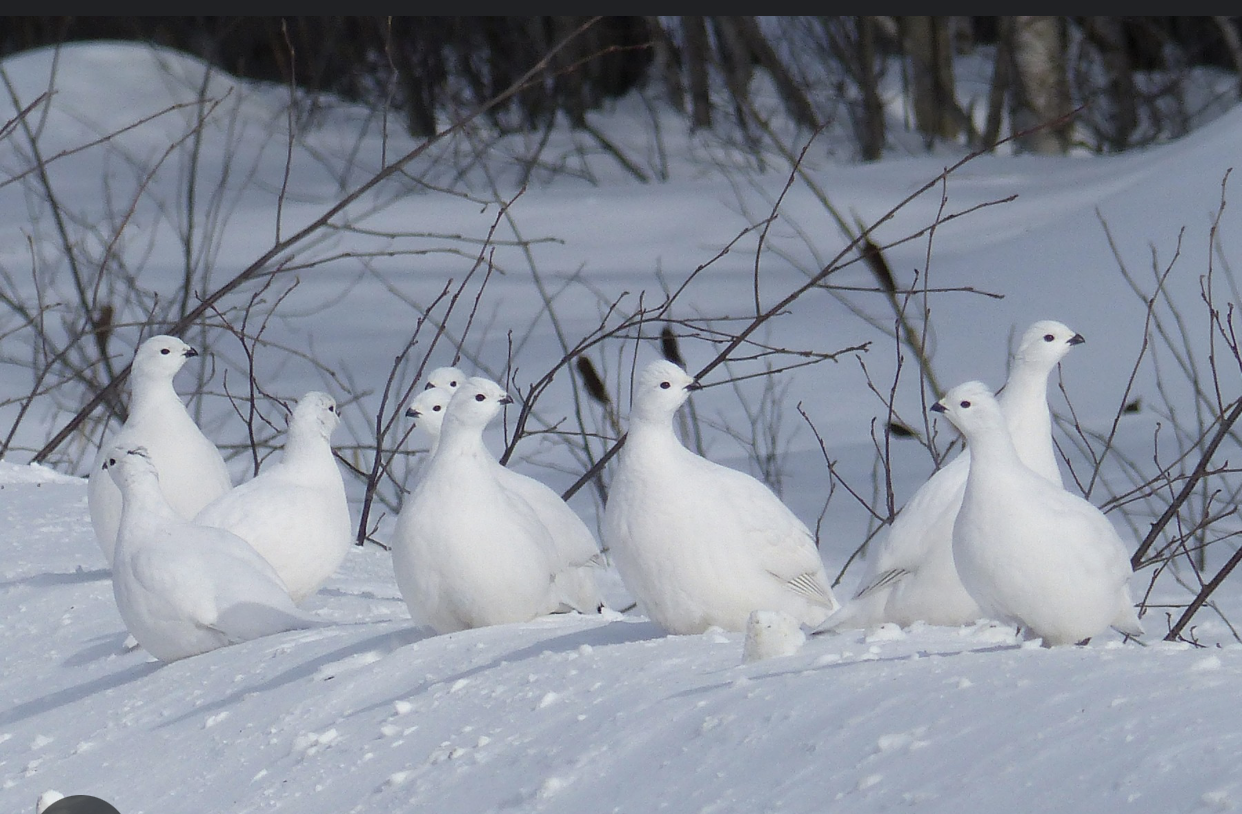
Ptarmigans photographed on the 2008 Ellesmere Island expedition. In today’s dispatch, Will mentions the emergence of these year-round residents of the Arctic region as a sign of spring’s approach.
A group of ptarmigans is called a covey. Because of their excellent camouflage against snow and rock a group is sometimes referred to more poetically as an invisibleness of ptarmigans. The rock ptarmigan is the official territorial bird of Nunavut, Canada.