
Day 25: April 27, 2026
A disorienting warm-weather storm brings whiteout conditions again and requires a leapfrogging advance technique to keep supplies together after finding “two lost brothers in a fog.”
-
Yeah, Will here, April 27th, day 25 on the Horton River Divide. A very interesting day today. In the morning, got up in the morning, it was snowing and it was white out. Kind of a south wind picking up. And the day before, I'd moved two other loads up about two miles, right on the other side, almost on the Horton River side. So I went north up the river, first of all. I had an hour or a mile up the river valley. That was real easy. I had an actual trail up to it, but I was totally blind. I couldn't see anything at all. I was on GPS. What would have taken 45 minutes took about three hours to kind of figure things out. And in order to get out of the Haldane River there, up out of that valley, I had to go up. I mentioned yesterday kind of a, it's like a plateau, you know, steep sides going down that are, you know, maybe about 100 feet or so, but they're drifted. There's only one place I found that I could get up all over that steep area to get up on the top of the divide. And that took me a little negotiating to figure that out. It was a much different story where I had really good visibility the day before. The wind was really getting strong going up the south valley, and that was blowing all the snow up that hillside. So it was pretty much totally blind going, but I actually did find the top. And then, again, I had a trail there from the evening before, but that wasn't there. So I followed that.
I was looking for the other, traveled for about a mile, then I started looking for the other two sleds. And, I mean, absolutely white out. You couldn't tell top from bottom. If you turn around, you get totally disorientated, and you really have to kind of focus. And I was hoping I could find those two sleds. It was fortunate that those two sleds were way ahead of me, you know, two miles up, because there's no way I could have relayed like I was doing. I was moving sleds even two miles forward and going back to get another one. That was totally out of the question today and also dangerous.
But this storm, though, they call it a warm-weather storm. It's not a dangerous storm. I mean ... a dangerous, meaning, you could last overnight if you got lost. Unlike some of those bad wind storms I had, you wouldn't last probably five or six hours without protection. That was two weeks ago. The south wind, though, this is the fourth day of that. This is really the beginning of the spring coming in here. It didn't get above freezing, but this time around there's more intensity, although there wasn't sun. Any snow, you know, getting in contact with any dark surface at all was, you know, really turned to ice, which is a sign. You know, it's just a minor thing, but just an observation that the heat from the radiation is getting stronger and stronger.
Eventually, you know, I found the two sleds. It's kind of like finding my two boss brothers in a fog. There they were, two little dots, and they were partially drifted over. And now I was just on the very top of the Horton River divide. So what I did is I couldn't get any more than maybe about 200 yards apart on the sled. So I relayed one sled forward and went back for another one and then moved the other one past it when I left behind, kind of like leapfogging from one to another back and forth. I decided I wanted to keep all the sleds together. And I did that, got down actually into the long lake. You can see it on the satellite photo and actual headwaters. Some of the, there's a little bit of the Horton River that kind of peters out to the north, northeast. There isn't really much water in it, but this is really the beginning of it.
The section that I'm on, if you take a look, there's two long skinny lakes, maybe three miles long. And then it's almost like the river takes, or the headwaters takes a hairpin turn. It goes forward about maybe six miles, and then it winds back. Not a sharp hairpin. Maybe you took a hairpin and you bended it out, you know, maybe 25 degrees or so, and then it comes back. So if you can visualize a hairpin that's been, you know, pushed out a little bit, and you're at the head at it, where it's at the beginning, and then you go around for the loop. What I'm going to do is shortcut that. It's about four-mile shortcut that I'm going to do tomorrow, depending on the weather. If the weather's bad, I'm going to try to travel. Sitting in this tent, a weather day without much fuel, I'd rather try to travel and see what happens on the weather. But it feels really great, though, to be now actually on the Horton side. And look at this heavy load that, you know, is bad. I should get all these supplies up here. But I'm still not officially there where, you know ... you can't navigate from a raft from here. But once I take that shortcut, I'll be there and probably, you know, see what happens there. So anyway, this is Will here on the Horton River Divide for the first time. And beautiful, beautiful. I can't see anything, but I imagine it would be pretty out here if the sun was shining. But it's still pretty in the white out in the fog. And over out here on day 25, April 27th, over and out.
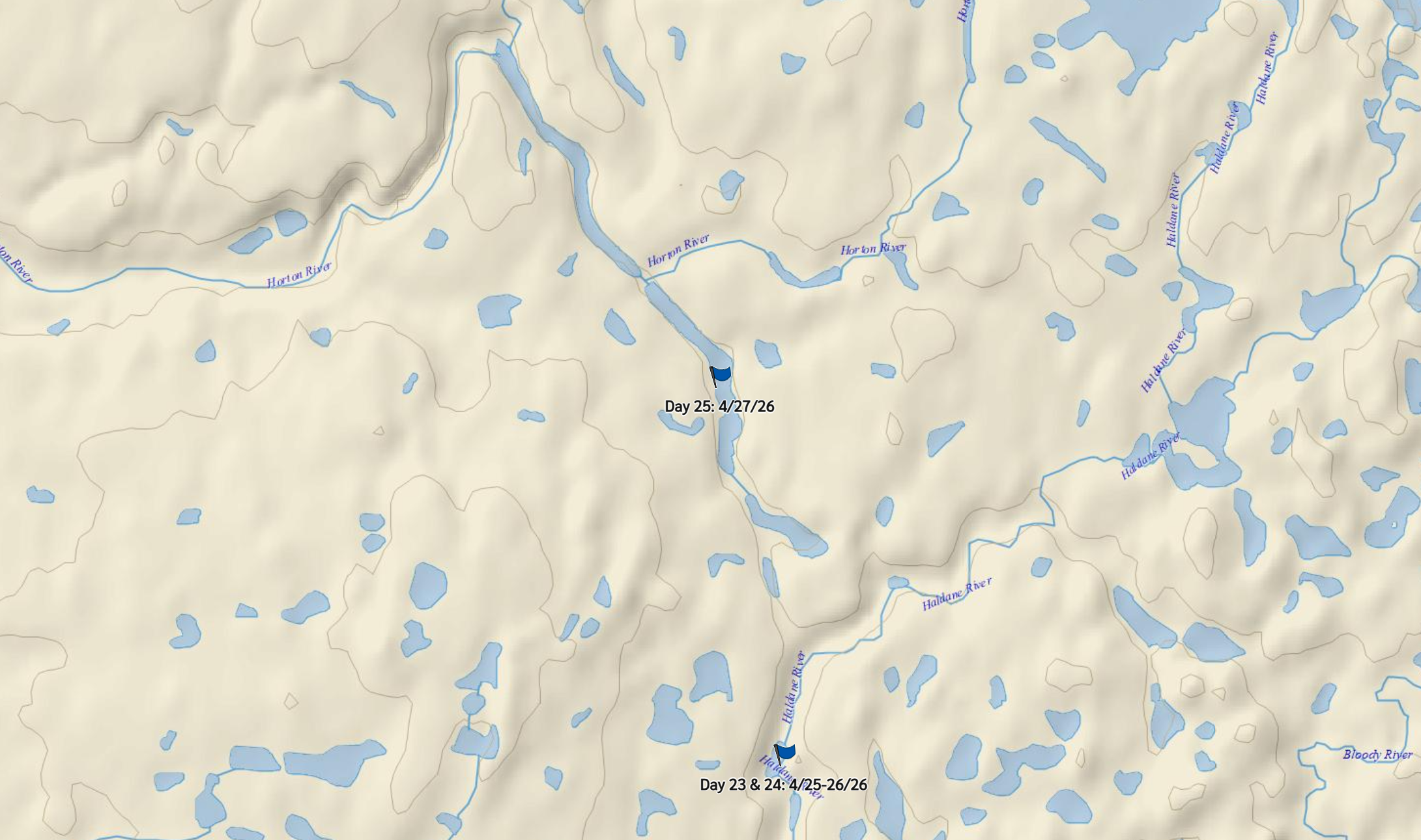
The small lakes mentioned in today’s dispatch coincide with the location marker. The hairpin Will plans to cut across as a shortcut is also visible ahead in his north-northwesterly direction of travel. Visit Will’s interactive map for complete control of magnification and orientation.
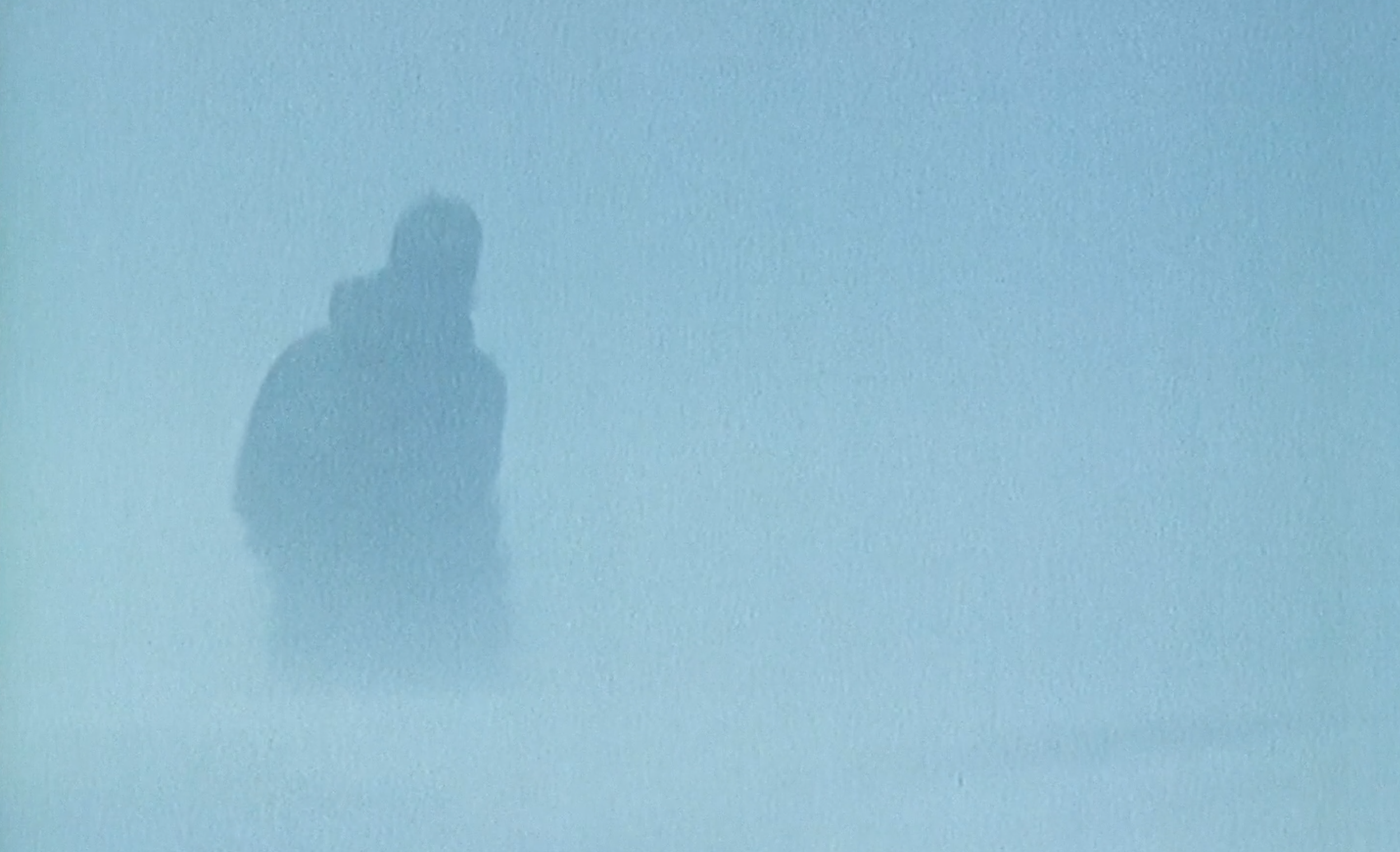
Whiteout conditions, where “You couldn’t tell top from bottom.” This image is from the 1989 Transantarctic Expedition.