
The Last Dispatch: Day 69, June 10, 2026
Faced with an impassible 20-yard river, Will reflects on soloing, the nature of chances, margins, goals, edges, and beauty, and what it means to end the expedition here.
Audio transmission was problematic for this dispatch and required three separate attempts, all of which are cut off before being finished. The dispatch audio below combines all three.
Will’s third dispatch cuts out right as he begins to describe the A Life of Legacy events at the Minnesota History Center, June 25-28. See the schedule of events to find out more.
-
Yeah, Will here, it's June 10th. I think it's day 71. Wow. I survived the storm okay. Pretty fortunate. Last night after I talked on the phone when I was in my sleeping bag, hunkered down, I had just incredibly pouring rain. It was like 34 degrees outside. Just came down in sheets. And then there was heavy sleet after that. And that went on for a long time. And then the snow fell. And I ended up laying right next on the upside, you know, against the northeast wind. So I was laying against that wall, keeping my, the tent from literally blowing away. And I [...] my other gear [... audio cuts out]
Okay, I cut off. I don't have the batteries to redo. I went through three minutes. And then if I cut off, we'll patch this together if it takes a couple here. There's a couple important things to talk about.
But I managed to stabilize the tent inside. And I wouldn't say stabilize. And what you do in these situations, you get all your gear, waterproof bags, in one place. Because if a tent does go, everything that's loose inside disappears. And then you're in really deep trouble. And all along, at that particular point, I had to keep my back against the tent just to keep it from blowing. And I had to gather stuff up. I bring it in with my feet. And I gradually got everything packed away and got into a bivvy bag, sleeping bag. I put on all my clothes, every single thing, all my socks, my hat. And so if something happened, I was hunkered down. So, and then I went into the bivvy bag and slept back to that wall all night.
And if the tent did disintegrate, I could easily divide it. If you didn't have a bivvy bag, you might not, I don't think you would survive last night if you were left out in the open. So, so I felt, you know, sort of safe. I didn't want the tent to pull apart on me. Also, having everything in one place, really, it's regular storm procedures. What's different here, and this is like a routine, almost a routine storm. If I was traveling with two people, it would have been very safe. Because I was really concerned about these stakeout points outside. But I couldn't leave the tent because the tent itself might lift, be airborne. So I had to rely on my placements, which were good. They stuck. I mean, again, you've got to do things right. It's almost like a, soloing is like being a pilot. There's no gray area. You've got to do everything perfectly. Your edge is really narrow. If you step off that edge, there's very serious consequences. But it's simple with two people, there's a huge safety margin, especially when you're traveling with, like I have, three, three dog-team, six people people. That's a safe thing.
So I survived it okay. What I wanted to talk about today, and if it cuts out we'll do it on a third portion, is how I feel about having to end it here. The last day I traveled was June 8th. I had three rivers I had to get around. I couldn't go any lower than the very top of the divide because the water was just rushing off all over. I mean, it was a raging river down below where it was just a brook. So I had to go to the very top of the divide. It was very dangerous. And I got around two of the rivers. And I had just one more to go. And then it was a straight shot, 30 miles in a straight line, downhill off all the snow to Paulatuk. I would have been there.
But when I arrived at this river, I could actually hear it before I saw it, which is a very bad thing to hear. And then I came up over the hill there, looked down, and it was obvious. There was like a 20-yard channel. I [...] it that out. Ten yards of it were kind of shallow on either end. But there was a real deep section in the middle and a slight current through it and a little eddy on one side, but I miscalculated. And I had pre-designed a flotation makeshift, with some waterproof bags and so forth. But I just was not going to take the chance. I have a lot to do with my life yet. And the reason I'm around is I don't take those chances. And I don't care what the consequences are of doing it. So it was a natural thing that, hey, it's over. I'm not going to go forward.
[...] this squally weather, this beautiful rain [...] sunshine. But just as I saw that bypass, this huge rainbow on the other side up here, it's just glorious, beautiful. I haven't seen a rainbow this year. And I took that as a good sign. My decision was right. So how do I feel about that? Well, you know, these are solos. I don't have a lot of stock on the destination point. It's the journey that is important. The destination of Paulatuk was a practical one. I wanted to visit the Native people, the Inuit. I traveled through there in 94. I mean, I would love to have seen the town. I would love to have hiked, that final 30 miles in this beautiful country. But it was a destination with a cheap flight out, commercial airlines that I can get out for 500 bucks. And that's the destination.
I've done five major solos of this sort in eight years since 2018. And two of them I ended up in towns. And two I was picked up by planes in between. One by design. I left my canoe behind and they returned me to that canoe sled and I traveled on another three months the next year. And the other one was a Coppermine river where I had a really harrowing experience at [...] breakup. And it was obvious that there was a blockage forward and so forth. At that point I did call in a plane. It's always exciting trying to get yourself out on a plane because you just don't call someone up. But that was a 55-day solo. So I'm not invested in this type of a destination. It's not an ego thing. Oh, I went from here to there. Unlike the North Pole unsupported, that was do or die. And the South Pole also. Like the North Pole unsupported, you've got to be really meticulous. Mission statement of exactly how you're doing, your strategy. And so if you go off that mission, everybody knows that maybe you're there. Those are really high-pressured, high-stake expeditions.
But the solo, the reason for the solo is simple for me. It's really to travel in this country, in this beautiful country, with this quiet mind, real peaceful mind. And with that mind, I made all my decisions. It was just incredible on this expedition. The decisions of hard times when I was in, my decisions were always [... audio cuts out]
Yeah, this is the third installment. Sorry about this. But I just want to talk this out. And I was talking about the quiet mind and decision-making and making the right decisions. However, this type of travel like this is arduous. This is tough country. And I've traveled through storms, the whole thing. But it's really about the beauty. There is beauty in a storm, beauty in hardship. Sometimes it's pretty tough going. And it's not for everybody. But it's just an incredible space to be in, where you're head and the simplicity and the good health. My body, at 81 years old, checked out. I'm pleased to say it was 100%. I don't have any, nothing, any ailments or fitness and I'm just such a fortunate person. I was all along every day. I just felt this good fortune, maybe it's gratitude. But I felt just so fortunate and thankful for what I'm about to do with the Steger Center. I'm just in a perfect space.
And sometimes it's hard to explain why you do this. But I'm following my dream. But everybody has their own personal dreams. And it doesn't have to be what I do. I think I'm a bad role model. As people look at this and say, well, I could never do that. Well, that's not the right thinking. Everybody's got this dream. Everyone should challenge their security and their phase of life. And not that you're just challenging and challenging, but push yourself to that edge and then push yourself through the edge at a certain time. Nothing crazy. But get out of your comfort zone, your security, the ruts you get into, the everyday nonsense lots of us have to put up with, too. And find your, find where it's at for yourself. And that's where you've got to go. And it can be studying botany. It can be music. It can be dance. It's strictly a personal thing. And I'm just a different person that goes to extremes to learn and to find out things about the world and find this peace and to get these insights. The insight is the most important thing. I mean, the quiet mind is sort of like ... it's the quiet. It's the quietness. But out of that comes the insights, the creativity, all these spontaneous things, which is the height, the ultimate intelligence of life. And we all know that. And we know what it's like to be in a dance or that sunset and that insightful moments. That comes out of the quiet mind. And that quiet mind breeds that.
And that's the key to the Steger Center, the wilderness, that setting. And with a group of leaders that are trying to solve unsolvable problems. Not an individual, but a team of people dedicated to a project that is greater than themselves. I mean, it's a goal. It's something that I have proven to myself is all possible.
I don't know if anyone's still listening. I've got to do one promo here. [...] a number of events at the [...] Museum. And, you know, unfortunate, I came on unprepared here with dates and that. Damn, did it again here. But I'll talk about that for sure tomorrow. And I'll be on the phone a couple more times. This is at the end of the last week of June. It's a number of others, a couple of matinee ... panel [... audio cuts out here]
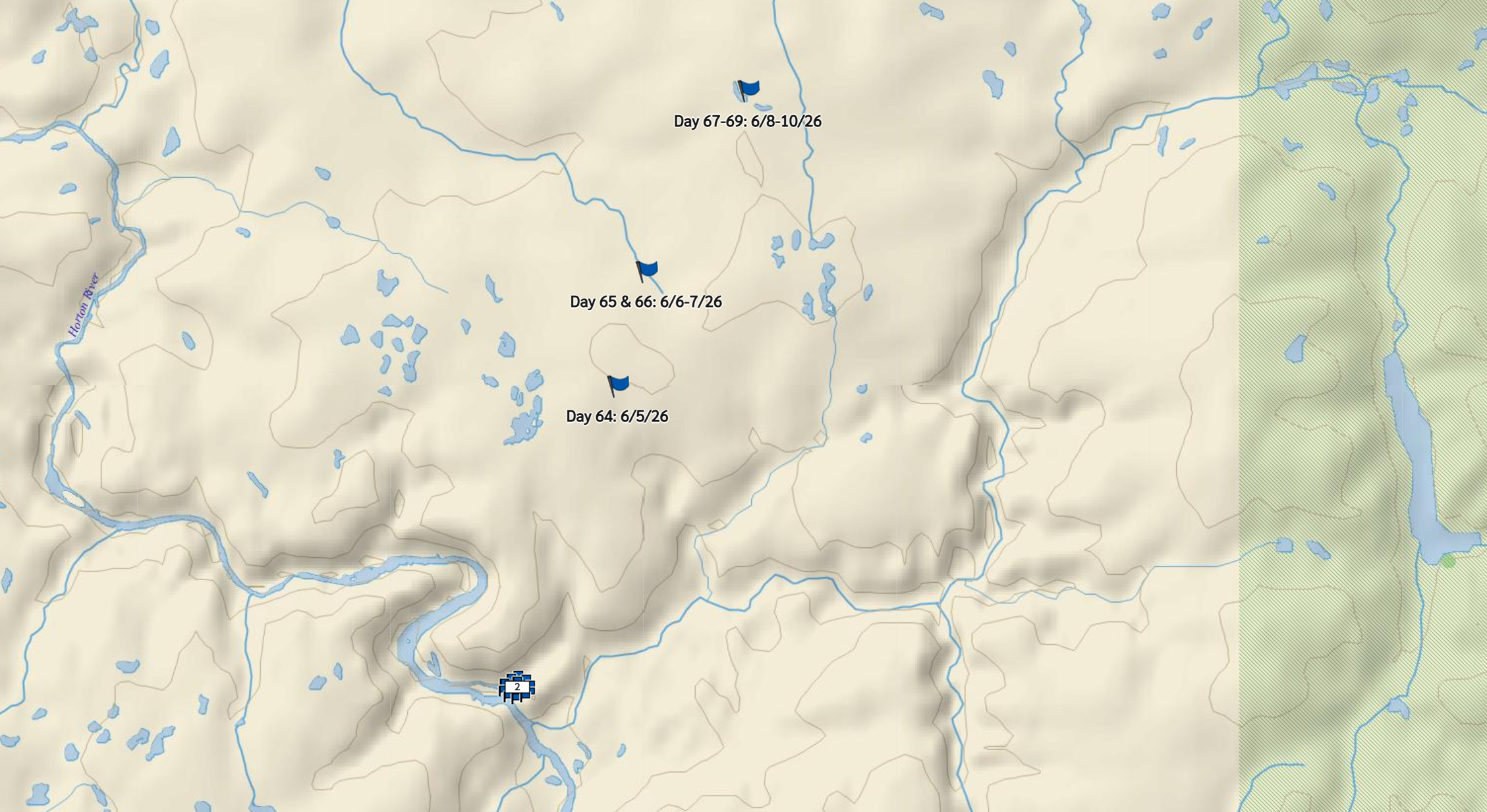
After surviving the storm, Will makes the decision to end the expedition here. Visit Will’s interactive map for complete control of magnification and orientation.
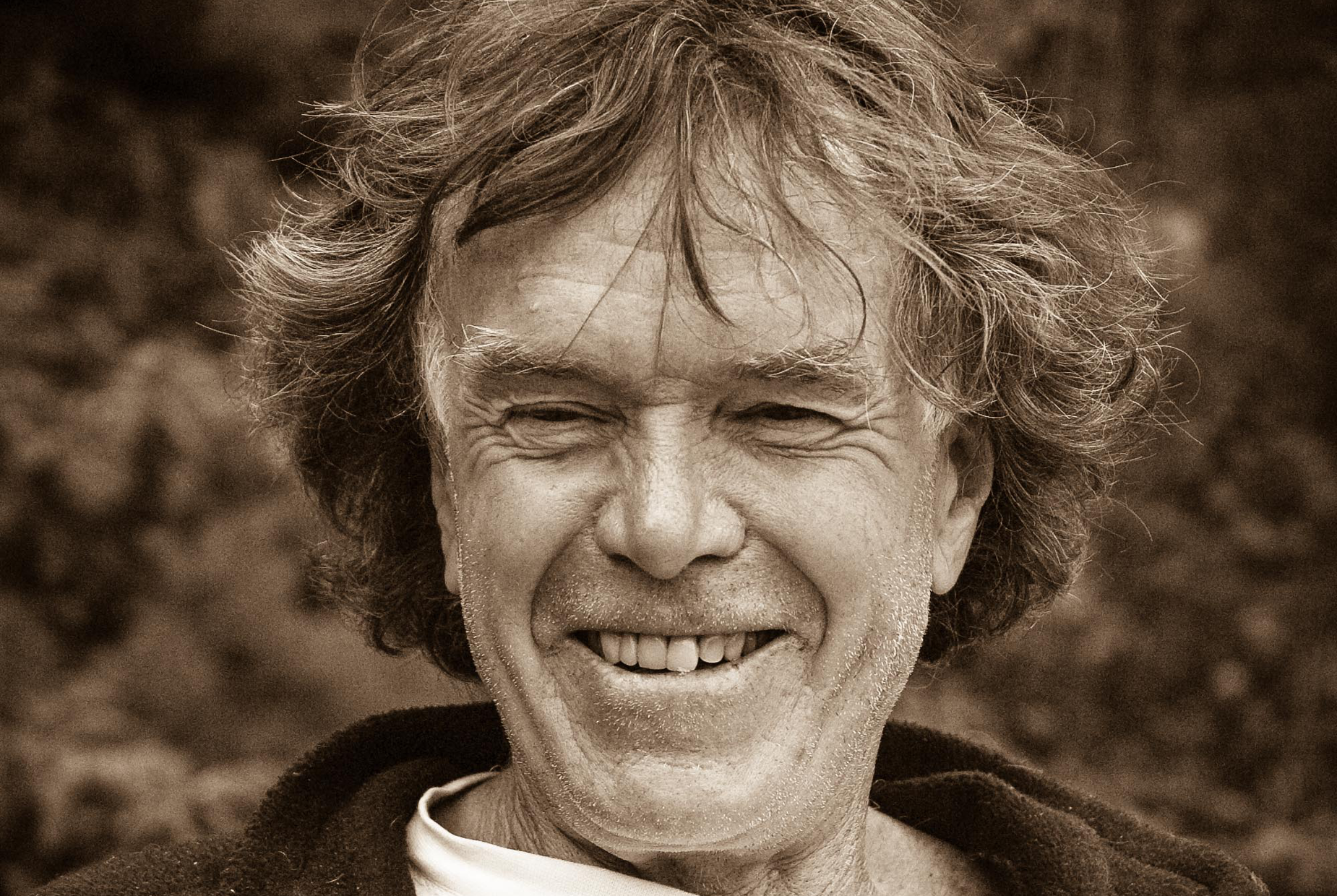
“But the solo, the reason for the solo is simple for me. It's really to travel in this country, in this beautiful country, with this quiet mind, real peaceful mind. And with that mind, I made all my decisions. It was just incredible on this expedition.”