
Day 4: April 6, 2026
Will’s fourth day was a tough 12-hour engagement through thigh-deep drifts, balanced by encounters with a curious band of caribou, with beaver, and with the stark beauty of the Arctic's high-pressure stillness.
-
It's Will here. It's April 6, Day 4. It's been a really tough 12-hour day, sunrise to sunset. It started out a little adventurous. I was in a small little kind of a gorge. The walls were about 70, 80 feet. Maybe 100 in some places. A big block set that rolled down into the river. And it wound around quite a bit. Really, it would be a very dangerous place to be in a break-up time. A lot of right hand turns into walls. But it was very stable ice. I had some overflow there. Overflow is water that flows on top of the ice, therefore "over-flow". In the Arctic areas, most of these smaller rivers, this would be classified as a smaller river I'm on—they freeze all the way to the ground. And then the groundwater, which is the water in the ground, still flows down. It's insulated by the, you know, the earth. It flows out onto the stream. Normally that groundwater would go directly into the river. But it floods off into pools. And it can be quite dangerous. I've been on a lot of overflows, so this is not really anything really too tricky. But it gave me some really good frozen surfaces for about the first hour or so. I still had to relay in two loads there. But it was a little bit of a break. But then I got into some really deep snow. Most of the day it's about thigh deep. And I'm doing two loads back and forth. It was really a stunningly beautiful day. It was clear. It got ... probably got up to a few degrees above zero. Calm. Beautiful surroundings. I got out of the canyon. There's still ridgy shoreline. And the black spruce now are a little bit smaller. Still really beautiful.
A lot of tracks. On one of my relays I went forward and on my way back, there was four caribou. And caribou are a kind of ... at this time of the year they're a kind of a whitish, kind of whitish, grayish color. From a distance they look white, they're almost like the reindeer Santa used to drive around in. And ... the northern ... the polar caribou are pure white. They're almost extinct now. I've seen those in Ellesmere Island. But the four of them were checking out my trail, kind of stomping down on it and trying to figure out what this was that they were looking at. They weren't really too afraid when they saw me. Caribou are that way, they're really curious. They'll look at you until you get close and then all of a sudden, they'll bolt. And then they'll stop and then look at you again. But these weren't in any hurry. They just kind sauntered up to kind of a real steep ... they made a trail for each other getting up, back up to the forest again. They were looking down at me on the way down. There's some actually ... I saw some beaver trails. There was one point where there's a little bit of flowing water underneath the ice that the beaver was using.
But most of the day it was really hard going. But still really pretty. I mean, the hardship is just, you know ... it's really for me about getting in good shape and that. I take a lot of breaks. I'm still getting in shape now. Day three ... I take a lot of breathers. And breathing, I usually look around and you know, and just absorb the area. But overall it was really hard. Physically, I'm in deep snow here, it's about 2.5 feet deep. I'm camped on a ... I couldn't find any real solid ice to camp on. But a beautiful camp. I made camp right after when the sun was setting. It took me extra long to get the camp up in deep snow conditions. But just watching this stunning twilight here. The temperature drops really quickly. But it's really, really typical settled weather, which you get in the western Arctic this time of the year. The western and the higher Arctic gets these long spells of beautiful, high-pressure air without too many storms, not too much wind. So I'm just kind of savoring in that. I think this season the wind that packed the snow down. But you know, I'm not making much forward progress in terms of latitude. I made probably mile and a half. I'm taveling more westernly in with a lot of bends. If you take a look at the satellite photo, you can see this here. So it's really slow going. And I'm going to take a day off tomorrow. Mandatory to get a rest. And I'll check out here. Will here, twilight ... late twilight time on the Bloody River. Over and out.
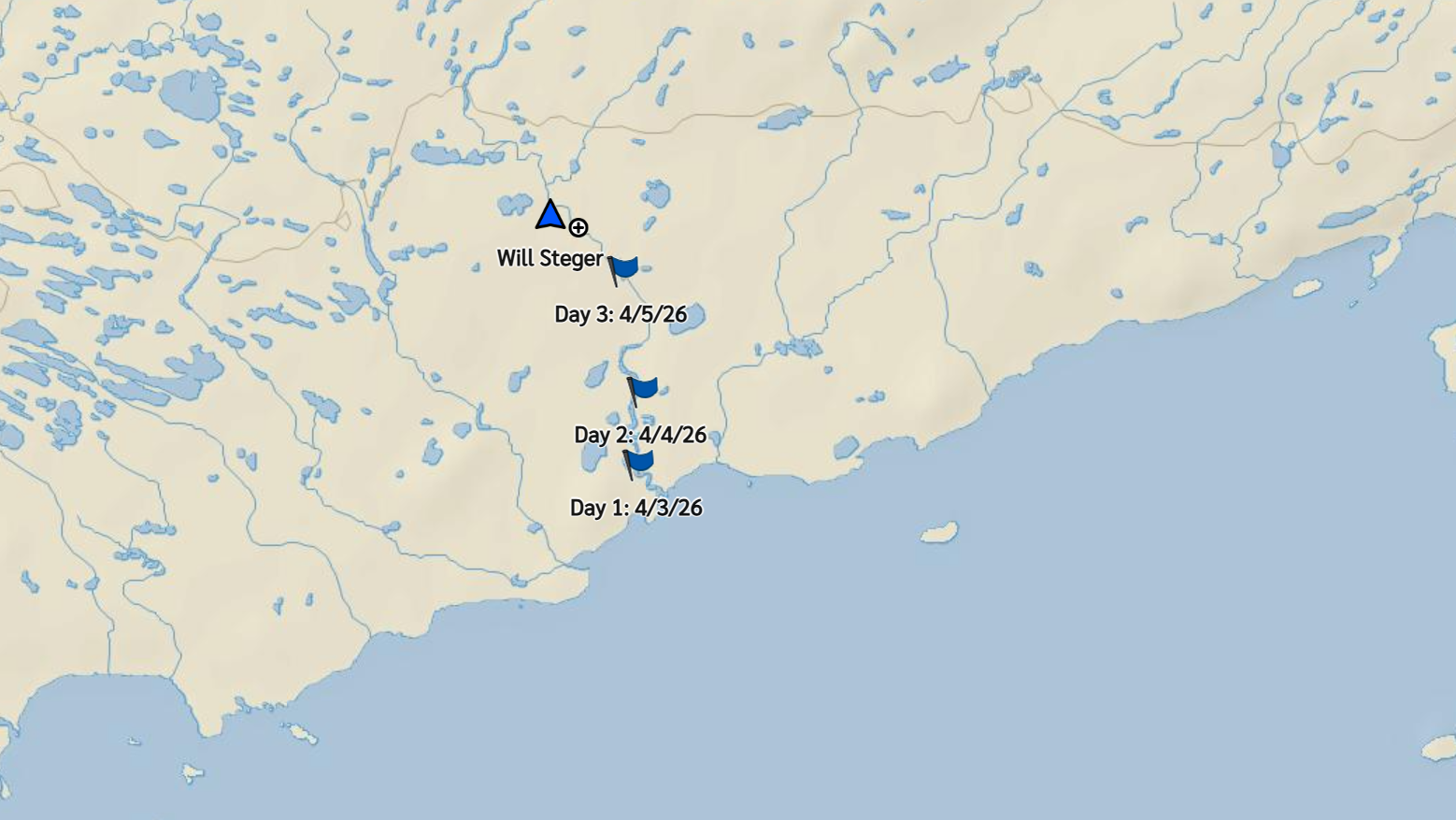
Will’s location at the end of Day 4. Visit Will’s interactive map for complete control of magnification and orientation.
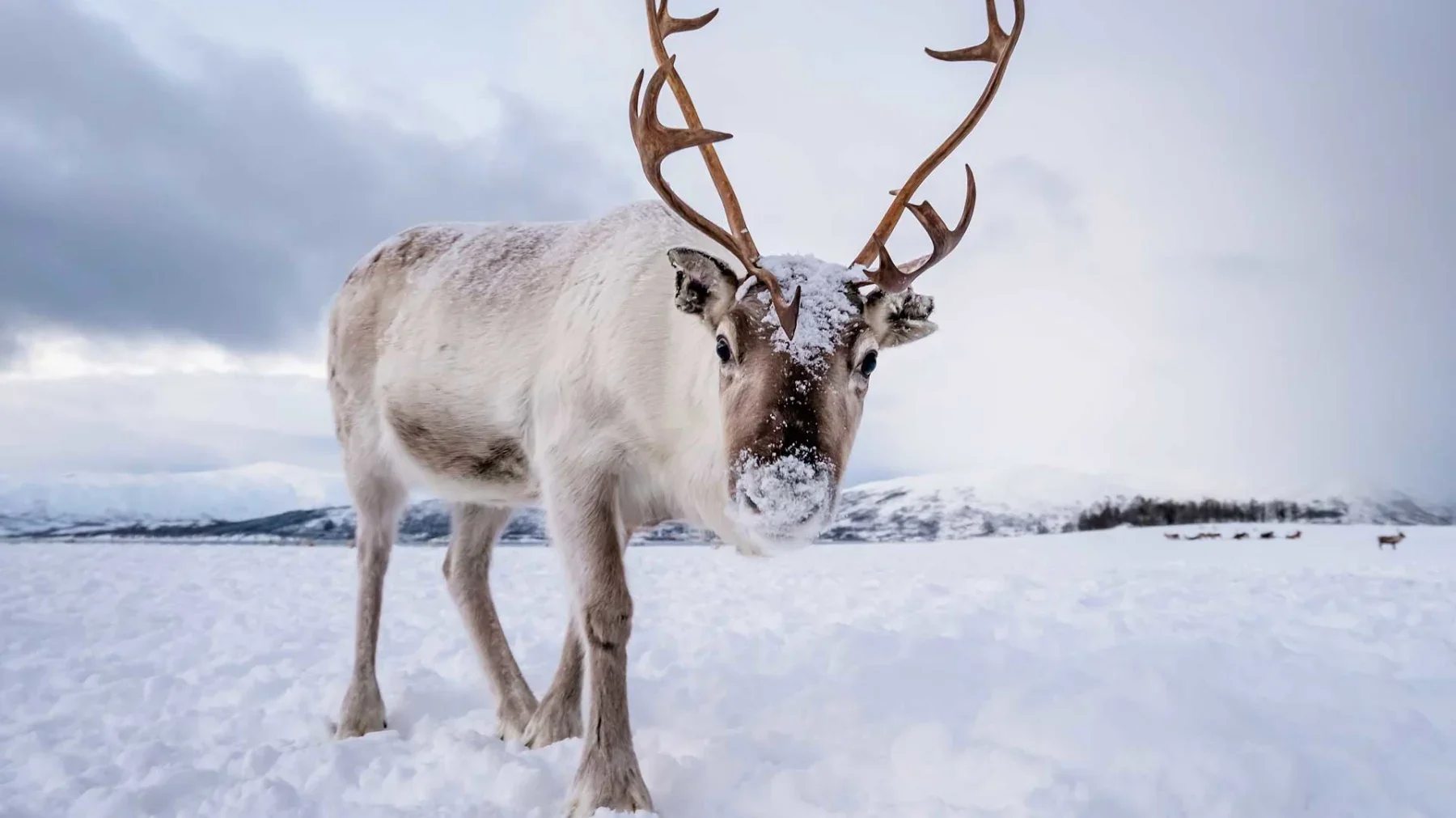
A caribou such as the four Will describes encountering today. This photo is from a wildlife travel guide published by Antarctica Cruises that is profuse with facts about these animals.