
What It’s About, in Will’s Words
The Quiet Mind
I am often asked the “why” question. Why do you do expeditions? Sir Edmund Hillary, after his famous ascent of Mt. Everest with Sherpa mountaineer Tenzing Norgay in 1953, answered that question, “Because it is there.” This is the perfect answer that reflects the question without answering it. The truth is, the why question cannot be answered in words. It does not exist as a thought process. Rather it is a state of presence that I call the Quiet Mind.
As children we are all born as enlightened beings. In Western society, this innocence with its innate curiosity is hammered out of most of us as we are forced to conform to cultural norms, to “schooling” and belief systems, to the world of time and the chains of the clock. Thanks to the freedom my parents gave me I never lost my curiosity. I have always followed my dreams. As a kid in the 1950s, National Geographic magazines gave me the images that I wrapped those dreams around. They introduced me to expeditions, exploration and discovery, and the vastness of the Arctic and polar regions.
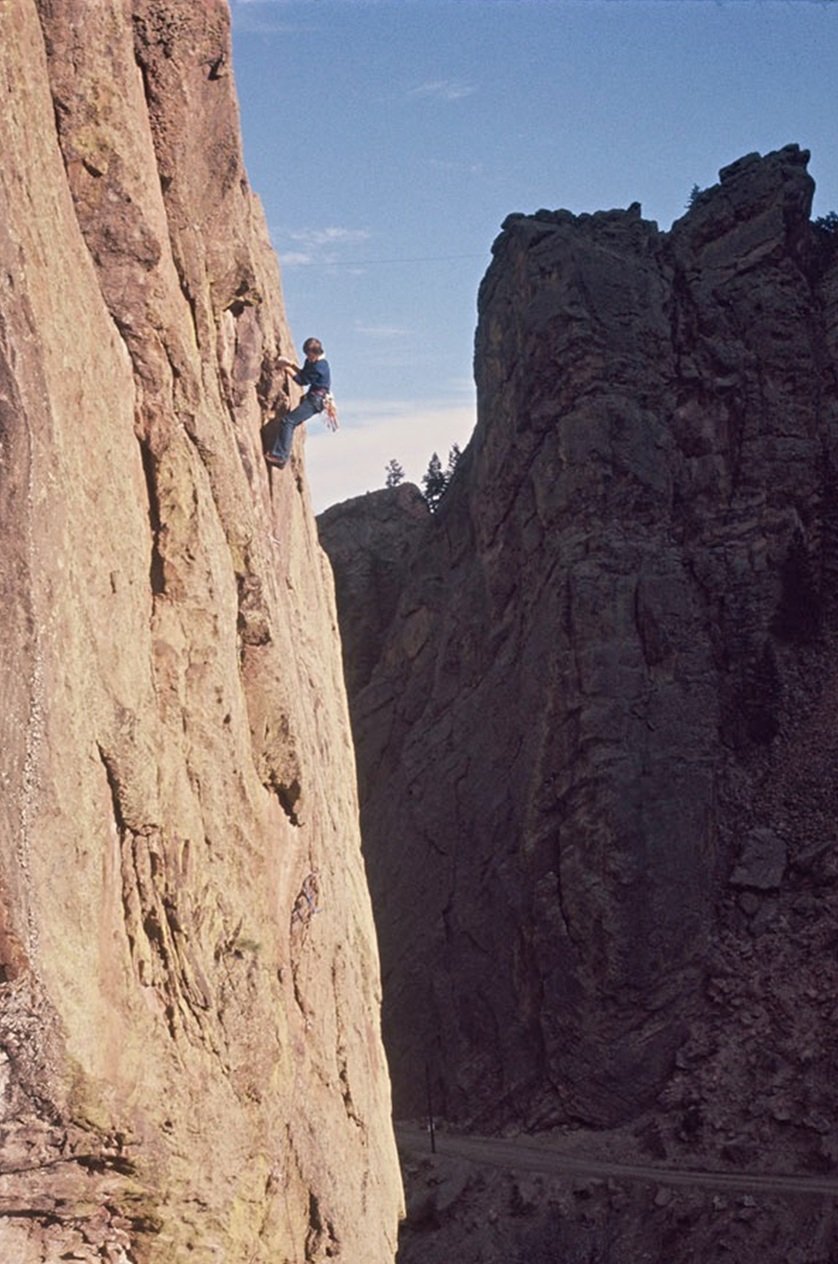
Those rock walls introduced me to the Quiet Mind.
Since I can remember I climbed everything—trees, flagpoles, buildings, billboards; anything to get height. I loved dangling high up in the air and the views from those high places gave me inspiration. In 1961, at age 16, I bought a hemp rope from the hardware store, borrowed a book about mountaineering from the Minneapolis library, learned the knots, recruited some friends, and started to climb the cliffs on the North Shore of Lake Superior. No one climbed or kayaked in Minnesota at that time. There was no North Face or Patagonia; no climbing hardware, specialized clothing, or down sleeping bags; just war surplus gear from the Korean war. This was the beginning of my expedition days and I have been on this journey ever since.
Those rock walls introduced me to the Quiet Mind. The memories of my first attempt at lead climbing are still etched in my psyche. With my hemp rope cinched tightly around my waist, knees trembling, I inched out along a rather sizeable ledge. The route looked straightforward. The ledge tapped down ahead as it wound around a bulge of the wall, concealing it from view. Beyond this blind spot the cliff offered good footing for the final ascent to the top. The first fifty feet went well. I was starting to get a grip on my nervousness; I even stopped a few times to look around. My belayer, Ole, disappeared from sight as I rounded the bulge. This is when things got ugly. The finger holds remained solid and I was fairly comfortable toe-to-wall on the ledge. But I had made the error of not checking the route out properly. Ahead my little shelf tapped to a razor-thin edge. This sight blew the air out of any confidence I had left. I paused, looked between my heels hanging over the hundred-foot drop, and panicked. A white terror, the fear of dying, overcame me, short-circuiting my reason. Fortunately my instincts held. Hanging on by my fingers, I started to take slow deliberate breaths. This calmed my mind, giving way to an incredible clarity of presence. The world stopped and opened up to me. All these years later I can still sense the smell of my sweat mingled with the smell of rocks in the hot sun, an experience that I later learned was the smell of adventure. I looked down on the tops of the trees below, I heard the rustle of the leaves and the songs of the birds, I looked up to the blue sky with racing white clouds. I had come back to life again. The awe of the beauty of that moment I have chased all my life.
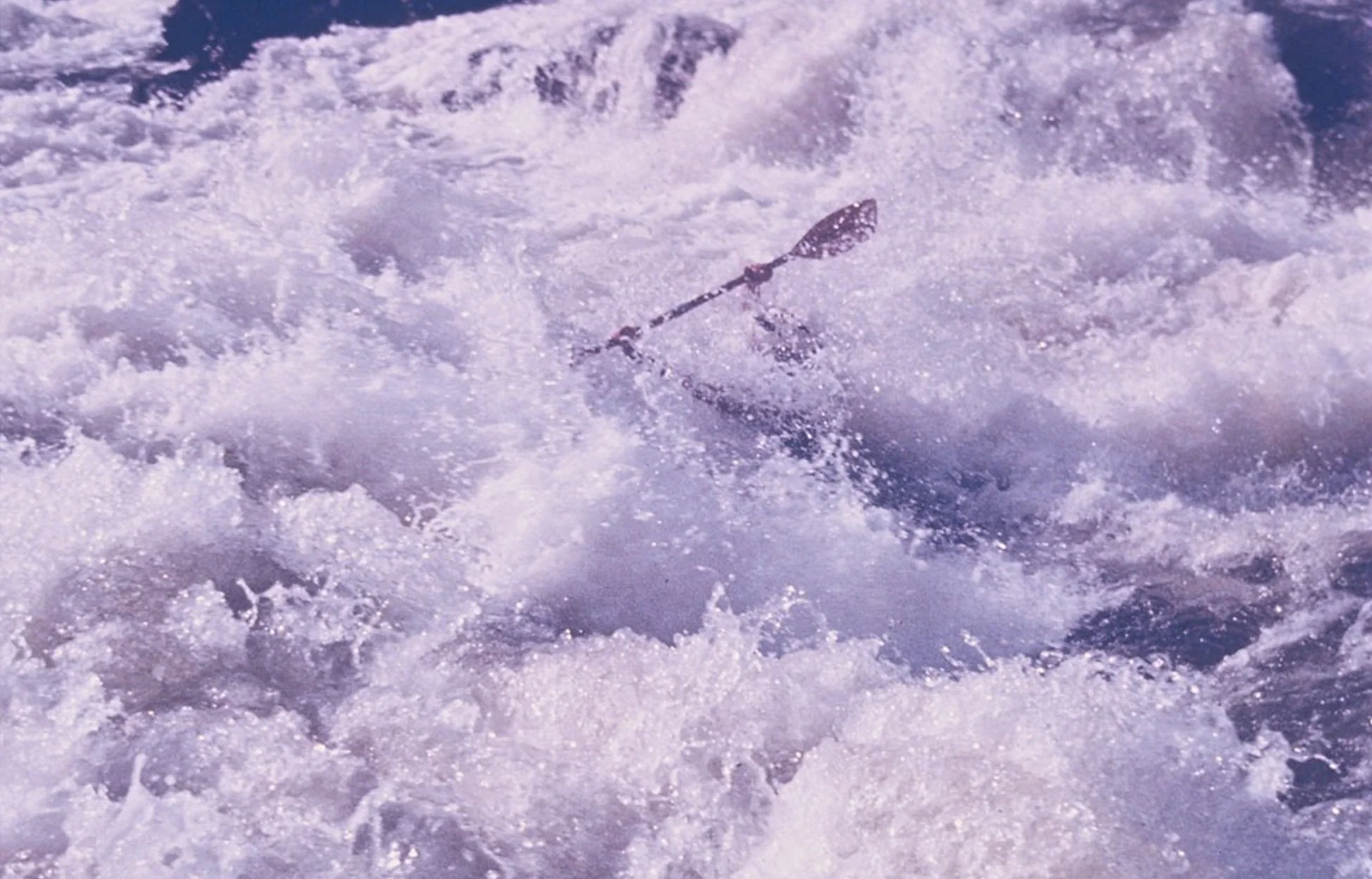
I continued to climb and kayak, and I learned more about the art of remaining calm in chaos, which I applied not only in dangerous situations but in navigating my everyday life.
By quieting my mind I realized there wasn’t anything to worry about after all. The ledge I was standing on still provided secure footing and there were plenty of solid finger holds. I was safe. Seeing that dead-end route had scrambled my head. But all I had to do was stop, assess the situation, back down from the route, and call it a day. I have carried the insight I gained that day all my life. As I continued to climb and kayak I learned more about the art of remaining calm in chaos, which I applied not only in dangerous situations but in navigating my everyday life.
My adventures evolved from two-person long-distance kayak and dogsled expeditions across the Arctic to leading international teams in both polar regions. My vocation and purpose in life has always been in teaching. In the last 40 years my expeditions have had educational and environmental platforms that reached millions. These expeditions, with their far-reaching impacts, were made possible because small teams were committed to a goal larger than ourselves. My life has truly been a team effort.
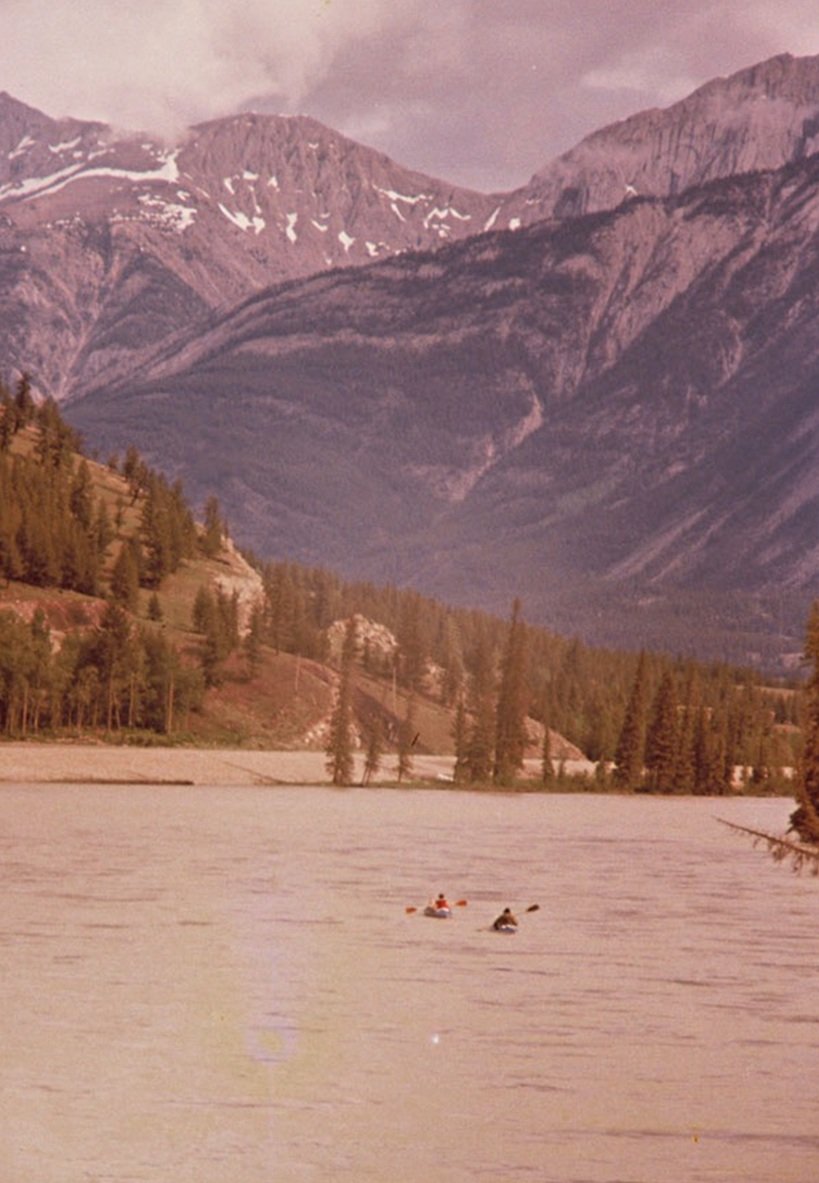
Ole and I, June 1964, at age 19, kayaking the Athabasca River in the southern Canadian Rockies, at the start of a 3000-mile trip to Alaska.
It is in that spirit of small groups working together toward a common goal that I dreamed of creating the Steger Center, which is now becoming a reality. My commitment of time and energy to completing the Center means I can no longer organize large international expeditions. Instead, over the last decade, I have been building up my skills and dwelling in the Quiet Mind through solo expeditions. Many of you have followed along with me on these journeys while listening to the daily dispatches I send. In early April I will be leaving on a 60-day unsupported solo in the Canadian Arctic. I look forward to experiencing the beauty and danger I will find along the rivers there as the ice breaks up. Please join me in this adventure. And I challenge you to quiet your mind during these chaotic times and to take on adventures of your own.

